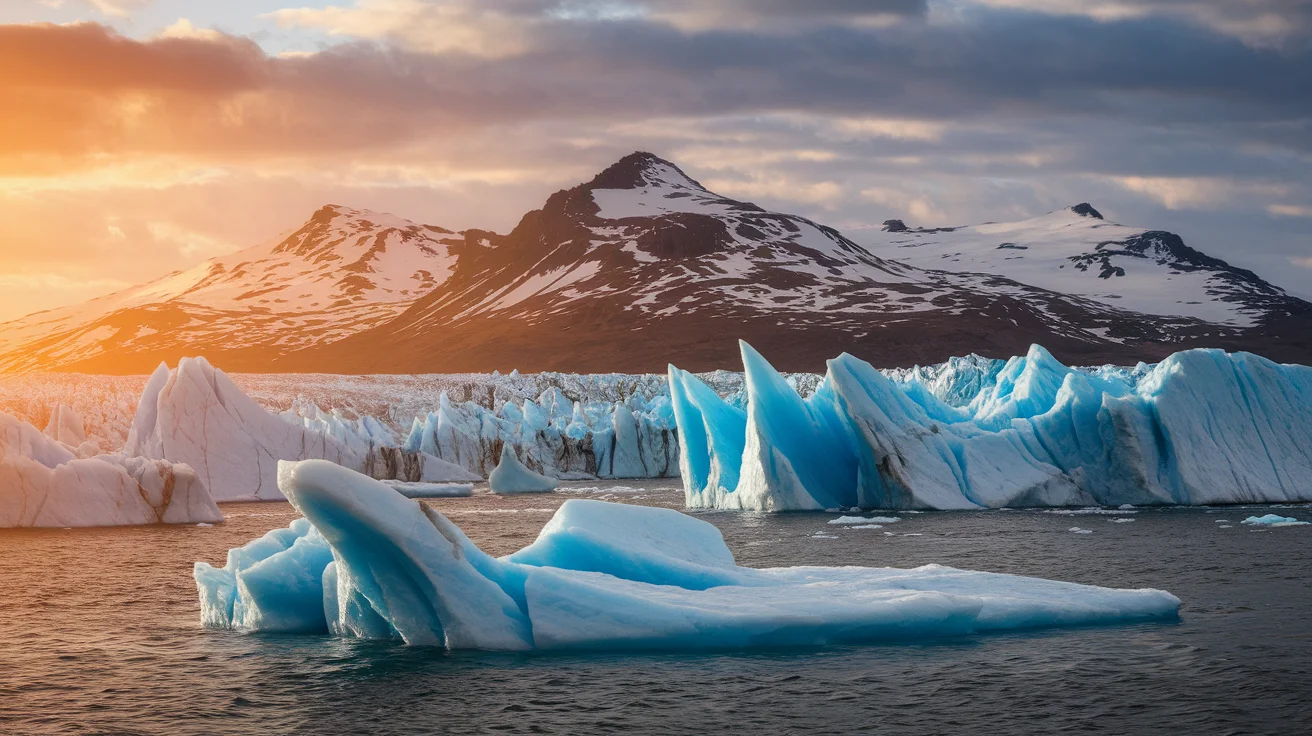
Earth's climate reached new extremes in 2025, with oceans breaking heat records and glaciers melting faster than ever, according to the WMO.
The World Meteorological Organization (WMO) released its State of the Global Climate 2025 report on March 23, 2026, warning that Earth's climate is more unbalanced than at any point in observed history. The report details that oceans have broken heat records for nine consecutive years, with 90% of the ocean surface experiencing marine heatwaves in 2025 despite cooling from La Nina.
Key findings include that 2015 to 2025 marked the hottest decade on record, with global mean sea levels rising faster since 2012 than in the previous two decades. Glaciers continued their retreat, as seen in Iceland's record melting, and Earth's energy imbalance reached an all-time high, meaning more solar energy is trapped than escapes.
Extreme Weather and Human Impacts
Extreme weather events in 2025, such as heatwaves, wildfires, flooding, and tropical cyclones, caused thousands of deaths and billions in economic losses. For instance, California wildfires in January 2025 resulted in over $60 billion in damage, the costliest on record, and highlighted growing health risks like the spread of dengue fever, now the fastest-growing mosquito-borne disease.
Carbon dioxide levels reached their highest in at least 2 million years in 2024 and continued rising in 2025, driven by fossil fuel burning. This has exposed over 1.2 billion workers to dangerous heat annually and forced 250 million people from their homes due to weather-related disasters over the past decade.
UN Secretary-General Antonio Guterres stated, 'Every key climate indicator is flashing red,' emphasizing that humanity has endured the 11 hottest years on record. He linked the crisis to global instability, noting that wars and militaries contribute to emissions.
WMO Secretary-General Celeste Saulo added that human activities are disrupting the natural equilibrium, with consequences lasting centuries or millennia. The report warns that ocean warming is irreversible on timescales of centuries to millennia, even with emissions reductions.
Scientists predict potential temperature spikes if El Nino returns, which could exacerbate extreme weather. The findings underscore the need to ditch fossil fuels and transition to renewables for climate, energy, and national security.