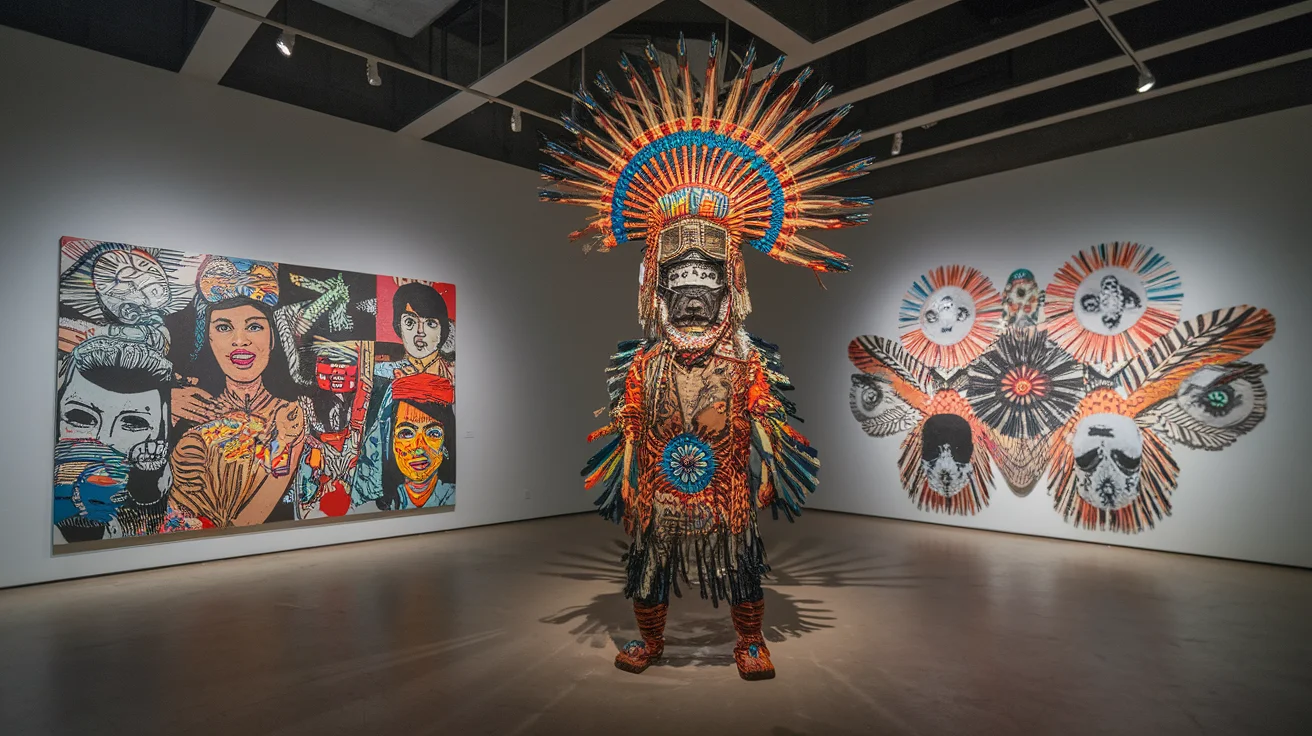
An exhibition in Bonn reframes Amazonia as a dynamic cultural region, countering exoticized portrayals through Indigenous perspectives and artworks.
A new exhibition in Bonn, Germany, titled "Amazonia. Indigenous Worlds," challenges the historical exoticization of the Amazon rainforest and its Indigenous peoples. European depictions have often portrayed the region as a timeless, untouched wilderness, but this show reframes it as a culturally diverse area shaped by complex social networks.
Exhibition Overview
Co-curated by anthropologist Leandro Varison and Brazilian Indigenous artist Denilson Baniwa, the exhibition presents Amazonia as a region spanning Brazil, Bolivia, Peru, and other countries in the Amazon Basin. It emphasizes the linguistic diversity, with over 300 Indigenous languages still in use, contrasting sharply with the European Union's 24 official languages. The curators group exhibits to reflect Indigenous understandings of history, avoiding standard chronological formats.
Artworks in the exhibition address stereotypes directly. For instance, Denilson Baniwa's "Hunters of Colonial Fiction" incorporates early anthropological photographs with global pop culture icons like the DeLorean from "Back to the Future," to question how such images have shaped misconceptions about Indigenous peoples.
Another piece, Jaider Esbell's "Letter to the Old World," modifies a Western art encyclopedia by adding Indigenous cosmologies and environmental messages, exposing colonial biases in art history. These works highlight how Indigenous cultures adapt and evolve, countering the stereotype that they are static or belong to the past.
The exhibition explores pre-colonial histories, noting that millions lived in Amazonia before European arrival, cultivating species like Brazil nuts and acai. It discusses soil-building practices such as "terra preta," which demonstrate long-term human stewardship of the forests, disrupting narratives of an untouched wilderness.
Indigenous Perspectives on Time and Relationships
Indigenous communities view time as active in the present, maintained through relationships with ancestors and the environment. The show includes themes of creation stories and future visions, portraying Amazonia as a living cultural world. Scenes from rituals like the Kwarup Festival illustrate ongoing traditions and social complexities in the region.
Overall, the exhibition underscores that Indigenous peoples actively engage with modern tools like social media while preserving their heritage, challenging the notion that cultural change equates to loss. This perspective aims to deepen global understanding of Amazonia beyond simplistic tropes.
More Coverage
- Russian Oil Output Cuts Inevitable as Drone Attacks Reduce Exports, Sources Say
- Raja Ravi Varma's Painting Sells for Record $17.9 Million in Indian Art Auction
- Countries Consider Wealth Taxes on Ultrarich Amid Inequality and Budget Needs
- U.S. Lifts Sanctions on Venezuela's Acting President Delcy Rodríguez