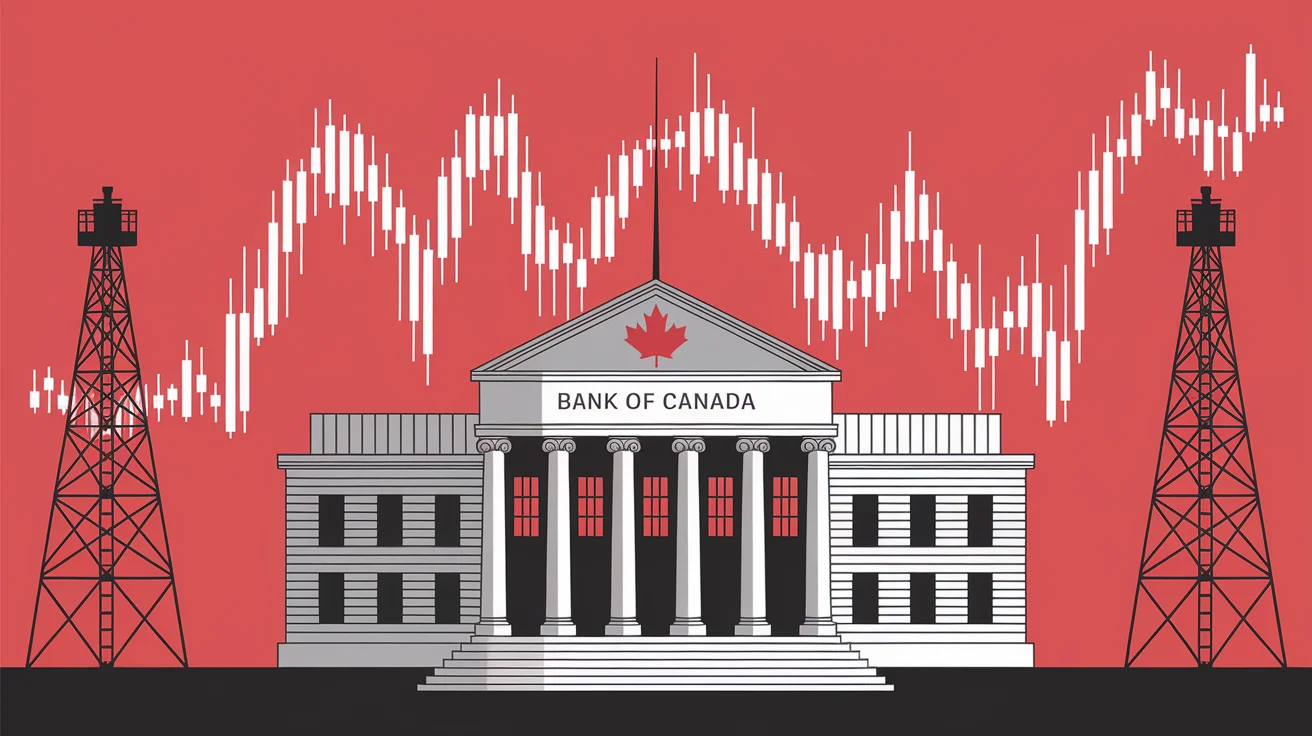
Canada's central bank likely keeps rates steady as fluctuating oil prices impact the nation's economic outlook.
The Bank of Canada is anticipated to hold its key interest rate steady at its upcoming meeting, influenced by recent volatility in oil prices that have disrupted economic projections. Oil, a major export for Canada, directly affects the country's GDP and inflation rates, making it a critical factor in monetary policy decisions.
Canada is one of the world's largest oil producers, with the industry accounting for a significant portion of its exports, particularly to the United States. Fluctuations in oil prices, driven by global events such as supply disruptions or demand shifts, can lead to rapid changes in Canada's trade balance and currency value.
Understanding the Bank of Canada's Monetary Policy
The Bank of Canada uses interest rates to manage inflation and economic growth, targeting a 2% inflation rate. When oil prices rise, they can push up inflation through higher energy costs, prompting the bank to consider rate hikes; conversely, falling prices might weaken the economy, leading to a hold or cut.
In recent months, global oil market instability, including geopolitical tensions and production changes, has made forecasting difficult. This uncertainty has led the Bank of Canada to adopt a cautious approach, avoiding abrupt changes that could exacerbate economic instability.
Implications for Canada's Economy
Oil's role in Canada's economy extends beyond exports; it influences employment in provinces like Alberta, where the energy sector is a major employer. A stable oil market supports job growth and consumer spending, while volatility can lead to layoffs and reduced investment.
Experts, based on economic data, note that prolonged oil price swings could delay rate adjustments, as the bank waits for clearer signals from global markets. For instance, if oil prices stabilize, the Bank of Canada might signal future rate changes in its policy statements.
Moving forward, the Bank's decisions will also consider domestic factors like household debt and housing markets, which interact with oil-driven economic shifts. This balanced approach aims to protect Canada's overall financial stability amid external pressures.
Ultimately, the Bank's hold on rates reflects a strategy to monitor oil-related risks closely, ensuring that any policy moves align with sustainable economic recovery goals.