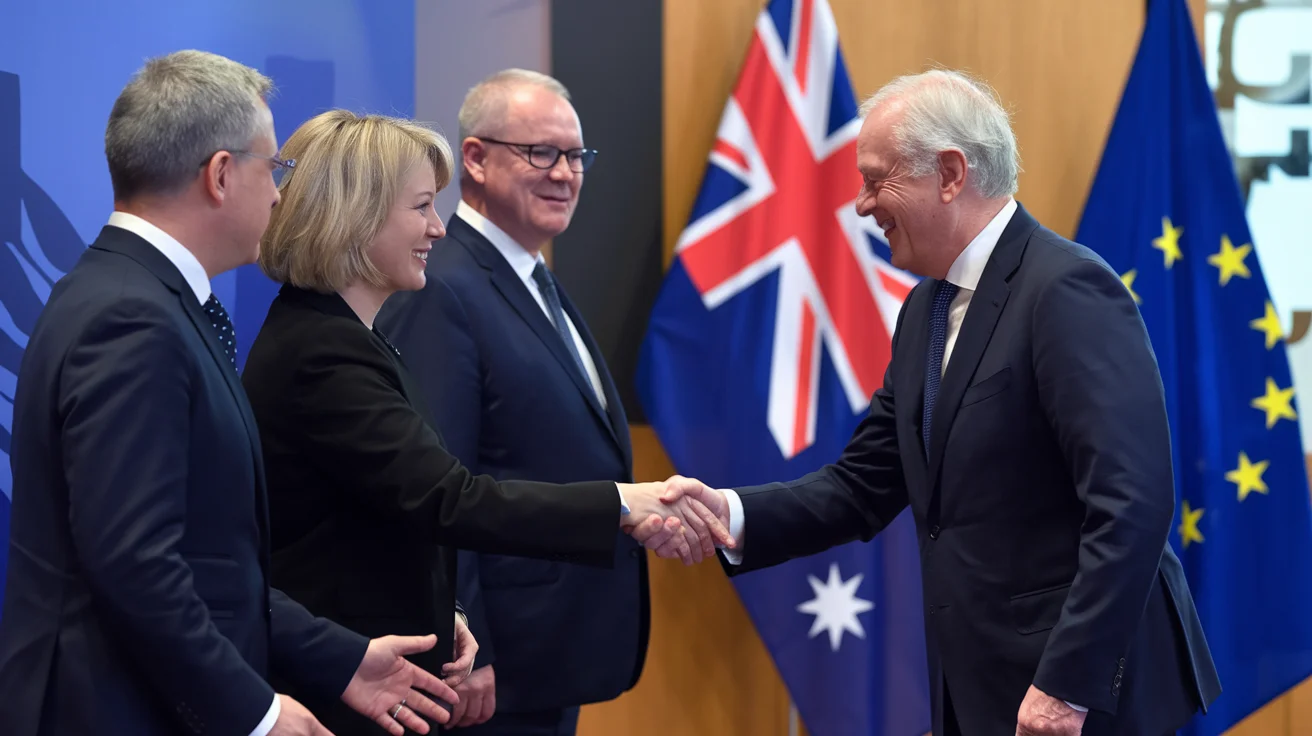
European Commission President to travel to Australia for trade discussions, highlighting efforts to enhance economic relations between the EU and Australia.
The European Commission President is planning a visit to Australia next week, as reported by Bloomberg, amid ongoing negotiations for a comprehensive free trade agreement between the European Union and Australia.
This visit underscores the EU's efforts to expand its trade partnerships in the Indo-Pacific region, following initial talks that began in 2018. The agreement aims to reduce tariffs and increase market access for goods and services between the two economies.
Background on EU-Australia Relations
EU-Australia relations have historically focused on shared values such as democracy and human rights, with trade being a key component. Australia is one of the EU's major trading partners, with bilateral trade in goods exceeding 70 billion euros annually, according to official EU data.
The proposed trade deal includes provisions for agriculture, digital trade, and sustainable development. Negotiations have covered sensitive issues like agricultural quotas and environmental standards, which have delayed progress in previous rounds.
Recent global events, including supply chain disruptions from the COVID-19 pandemic and geopolitical tensions, have accelerated the need for this agreement. Both sides seek to diversify trade routes and reduce dependencies on other regions.
Expected Outcomes of the Visit
During the visit, the EU Commission President is expected to meet with Australian officials to discuss remaining hurdles in the negotiations. Key topics include intellectual property rights and investment protections.
If finalized, the trade deal could boost economic growth for both parties, potentially creating thousands of jobs and increasing exports. It remains unclear when the agreement will be signed, as final approvals from EU member states and the Australian parliament are required.
This development reflects a broader trend of countries forging new trade pacts in response to changing global dynamics, positioning Australia as a strategic partner for the EU in the Asia-Pacific.