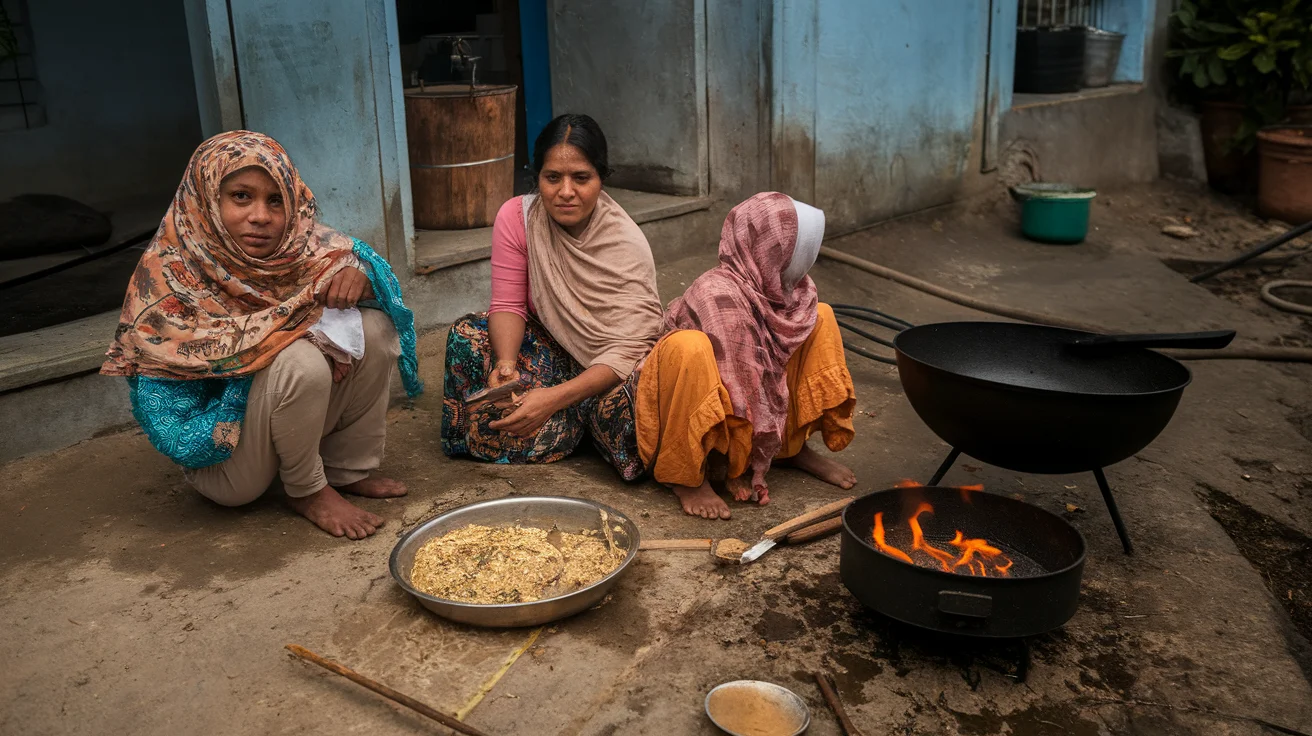
Reports indicate a spike in sales of firewood and cow dung cakes in India as gas shortages prompt a temporary shift to alternative energy sources amid ongoing conflicts.
Shipping disruptions from the US-Israel war with Iran have halted movements through the Strait of Hormuz, affecting about one-fifth of the world's oil and gas and squeezing supplies to India.
India, which imports about half of its LNG and most of its LPG through this chokepoint, has seen domestic users panic-buying cooking gas in recent days.
Immediate Government Responses
The federal government approved an extra 48,000 kilolitres of kerosene for states to support low-income households through the public distribution system.
Petroleum Minister Hardeep Singh Puri stated that kerosene is being made available through retail outlets and PDS channels.
India's environment ministry instructed state pollution boards to allow restaurants and hotels to temporarily switch to biomass, fuel pellets, kerosene, and coal for a month, prioritizing cooking gas for households.
Government data shows kerosene output has fallen from 7.5 million tonnes in 2014–15 to under one million tonnes in 2023–24, highlighting the rapid expansion of LPG use.
Reports suggest some regions in India are witnessing a spike in timber and cow dung cake sales as people turn to these biomass fuels amid the shortage.
Nandikesh Sivalingam, director of the Center for Research on Energy and Clean Air, noted that consumers will move back to LPG once supplies improve, but the shift could worsen indoor air pollution due to emissions from kerosene, coal, and biomass.
Vibha Dhawan, director general at the Energy and Resources Institute, pointed out that urban households may face more exposure to fuel shortages than rural areas, potentially leading to increased electricity demand.
India relies heavily on coal, which provided nearly 79% of its domestic energy in 2023-24, and experts indicate that any short-term shift away from gas reinforces this dependence.
Madhura Joshi of climate think tank E3G mentioned that rural households may turn to biomass like firewood and subsidised kerosene, while urban ones might shift to electricity or other options where available.