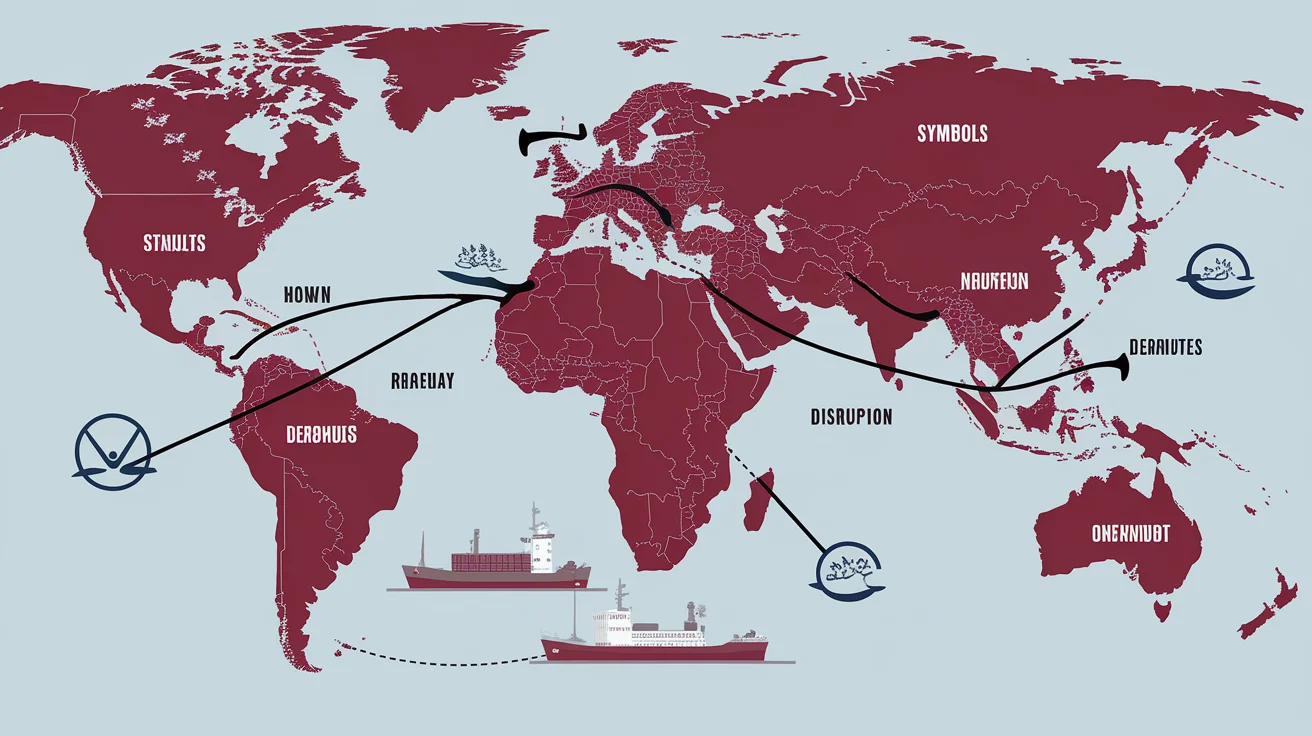
The Strait of Hormuz closure by Iran is rippling through global trade, affecting sea routes that carry 90% of the world's goods.
Around 90% of global goods are transported by sea, making maritime routes essential for international trade. The Strait of Hormuz, a narrow waterway between the Persian Gulf and the Arabian Sea, handles approximately 5% of this traffic, primarily oil and gas shipments.
Recent Closure and Immediate Impacts
Iran's actions have effectively closed the Strait of Hormuz, leading to immediate rerouting of vessels and increased shipping costs. This closure stems from heightened tensions in the region, forcing ships to take longer alternative paths around Africa or through other channels.
The ripple effects are disrupting supply chains worldwide, with delays reported in deliveries of consumer goods, energy products, and raw materials. Ports in Europe and Asia are experiencing backlogs as vessels avoid the area, potentially raising prices for commodities like oil.
Experts like Ebru Surucu-Balci, an Assistant Professor in Circular Supply Chains at the University of Bradford, highlight how even a small disruption in key chokepoints can amplify global economic pressures. She notes in an interview with FRANCE 24 that alternative routes increase fuel consumption and emissions, adding environmental concerns.
Governments and shipping companies are responding by stockpiling goods and seeking diplomatic solutions, but the full extent of economic damage remains uncertain. As trade volumes grow, such events underscore the vulnerability of global logistics networks.
Long-term, this incident could prompt investments in diversified shipping corridors, including expanded rail and air freight options, to mitigate future risks from geopolitical hotspots.
Observers report that insurance rates for vessels in the region have surged, with some carriers suspending operations entirely until stability returns. This adds another layer of complexity to international commerce, affecting industries from manufacturing to retail.