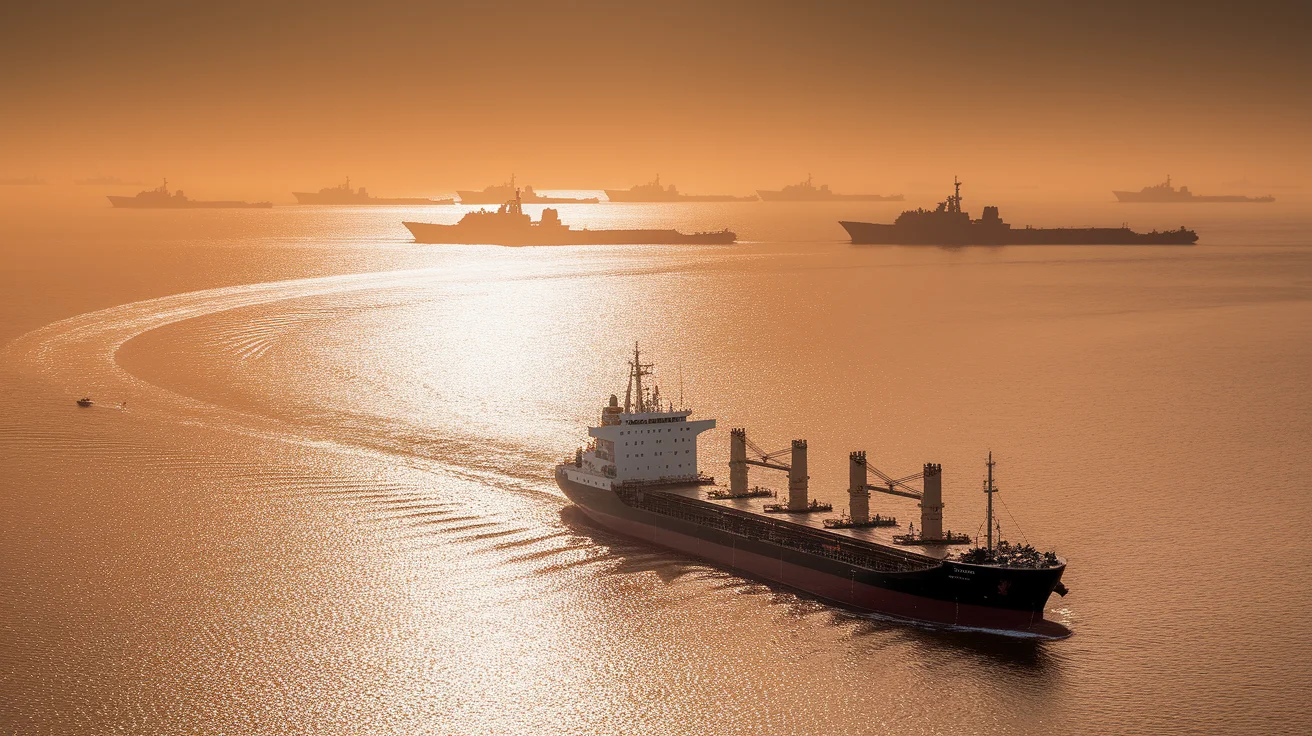
Lloyd’s List reports that Iran is implementing a new vetting process for ships in the Strait of Hormuz, allowing approved vessels to use a safe corridor.
Iran is developing a vetting and registration system for ships transiting the Strait of Hormuz, as reported by Lloyd’s List, in response to ongoing tensions.
Background on the System
According to Lloyd’s List, the system requires ships to provide detailed information on ownership and cargo destinations to the Islamic Revolutionary Guard Corps (IRGC) before transit. This process aims to allow approved vessels to pass through a designated safe corridor in Iranian territorial waters.
Several countries, including India, Pakistan, Iraq, Malaysia, and China, are in direct talks with Tehran to secure passage through the strait, as per the report.
Iran’s Foreign Minister Abbas Araghchi stated that the strait remains open but closed to enemies, marking a shift from earlier threats by the IRGC to target any transiting ships.
Traffic through the Strait of Hormuz has dropped 95 percent since the United States and Israel launched military actions against Iran three weeks ago, affecting global energy markets as about one-fifth of the world’s oil passes through the waterway.
Maritime data shows that a small number of ships, mainly flagged to Pakistan, India, or China, have transited the strait since the blockade began. Some vessels have turned off their automatic identification systems or broadcast their credentials to avoid attacks.
A new safe corridor has emerged, with at least nine ships passing through it in recent days, according to Lloyd’s List. One tanker reportedly paid $2 million for transit rights, though it is unclear if others did the same.
An international trade expert, Alex Mills, told Al Jazeera that this system might offer temporary solutions for some countries but could face challenges due to insurance risks and existing sanctions.
More Coverage
- Russian Oil Output Cuts Inevitable as Drone Attacks Reduce Exports, Sources Say
- Raja Ravi Varma's Painting Sells for Record $17.9 Million in Indian Art Auction
- Bitcoin Falls to $66,200 as US Dollar Strengthens on Iran Tensions
- Countries Consider Wealth Taxes on Ultrarich Amid Inequality and Budget Needs