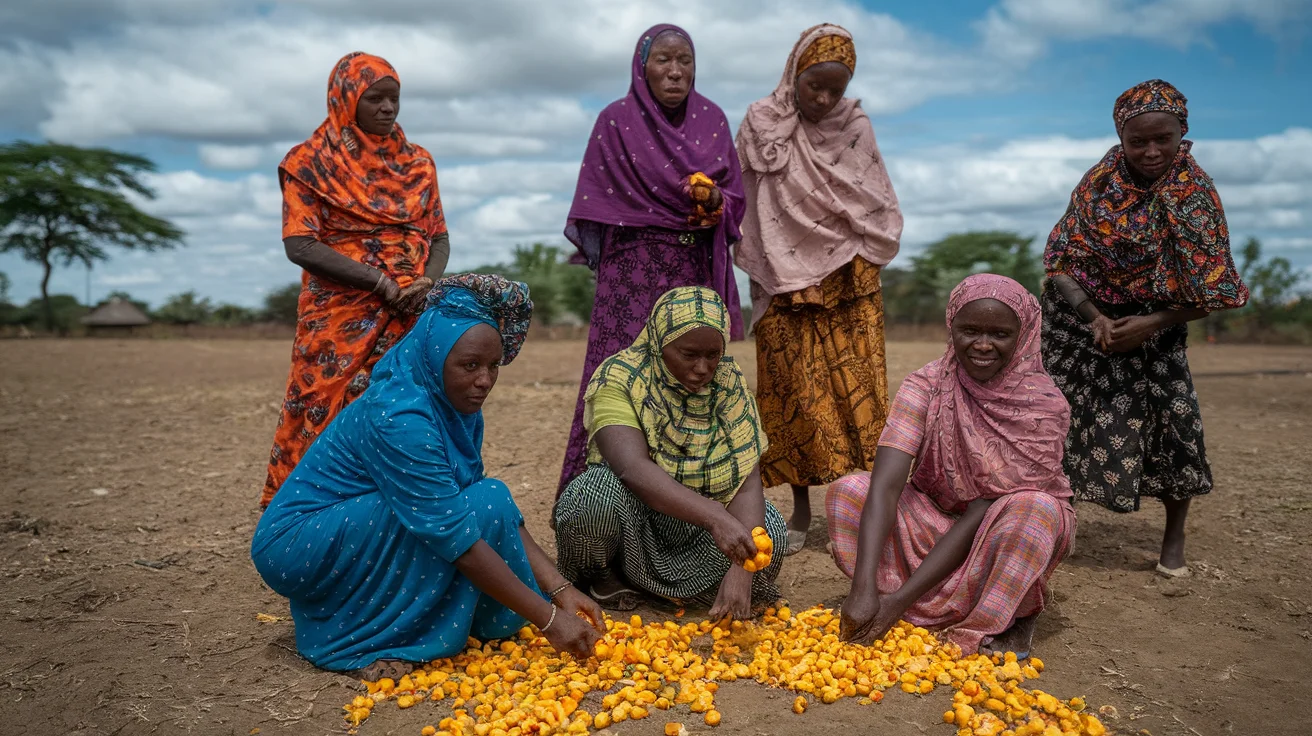
Residents of Turkana county face extreme food shortages due to drought, forcing them to forage for wild fruits as aid efforts struggle to meet the demand.
In Turkana county, northwestern Kenya, a prolonged drought has left residents like Lotkoy Ebey struggling with severe food shortages. Ebey, who once owned 50 goats, now has only five surviving animals as pastures have dried up, making livestock central to their culture nearly impossible to sustain.
Recent rains in parts of Kenya have been uneven, with Turkana receiving little relief, according to the local National Drought Management Authority. This follows two failed rainy seasons, exacerbating the crisis across East Africa where humanitarian organization Oxfam reports 26 million people facing extreme hunger in Kenya, Ethiopia, and Somalia.
For many in Kakwanyang village, the only food option is the fruit from the doum palm, known locally as 'mikwamo' or gingerbread tree. Villagers like Regina Ewute Lokopuu walk hours to find these fruits, which were once snacks for children but now serve as a primary food source.
Health Risks and Daily Struggles
The gingerbread tree fruit fills stomachs quickly but can cause drowsiness and severe stomach upsets if consumed in large quantities, as warned by Lokopuu. In Latimani village, Kerio Ilikol has gone three days without a proper meal, relying on neighbors for sparse help.
Local authorities, including Jacob Letosiro from Turkana's drought management team, state that over 320,000 people in the county urgently need food assistance. Across Kenya, about three million are affected, with humanitarian agencies like the Kenya Red Cross distributing supplies, though resources fall short.
The Kenya Red Cross and organizations such as World Vision Kenya and the UN's World Food Programme are providing aid, but officials note the demand exceeds available resources. The Kenyan government has announced plans to distribute food and livestock feed in affected areas, yet the scale of the crisis remains enormous.