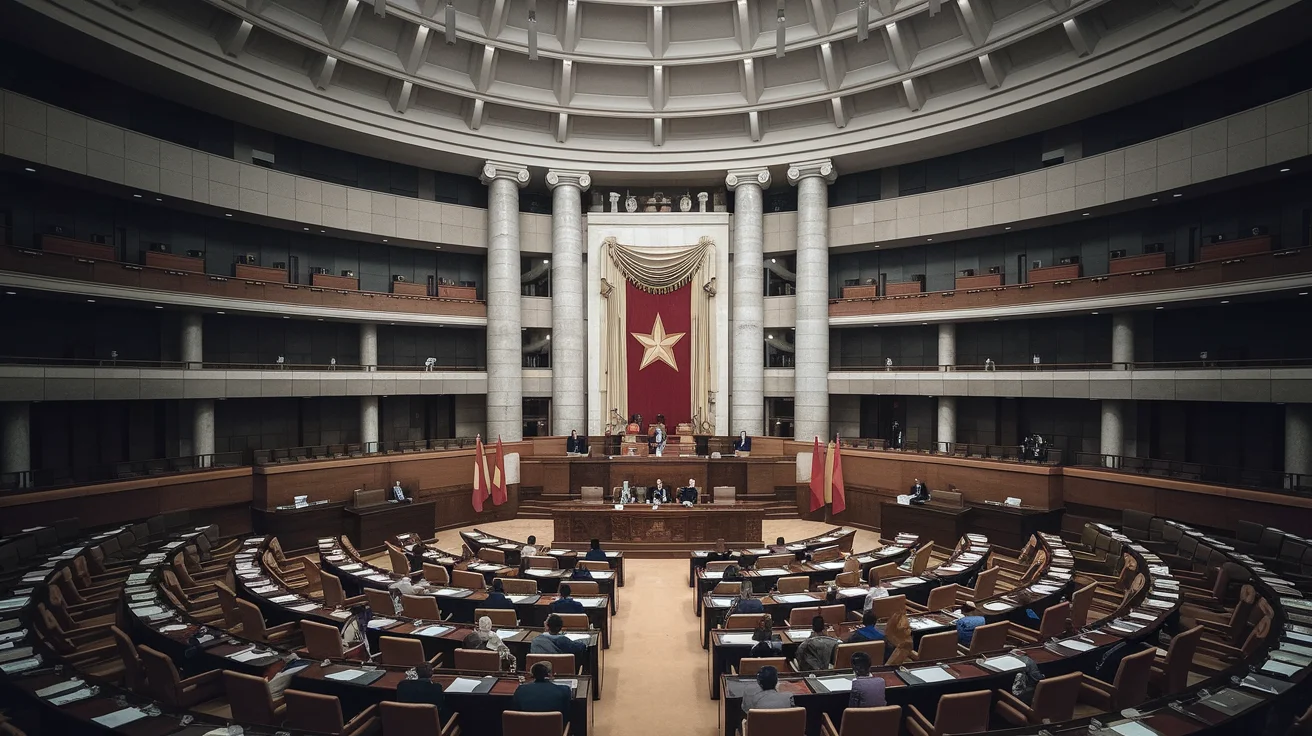
Myanmar's parliament met on March 16, 2026, marking its first session since the 2021 coup, amid a pro-military victory in recent elections.
Myanmar's parliament opened its first session on March 16, 2026, five years after the 2021 military coup disrupted the previous government. The session featured the pro-military Union Solidarity and Development Party (USDP) holding a majority of seats following elections held in December and January.
In those elections, the USDP secured 339 seats, while 166 seats were reserved for the military in the upper and lower houses. A total of 21 other parties won between one and 20 seats each, but major opposition groups were barred from participating.
Election Outcomes and Leadership Changes
During the session, Khin Yi, the USDP chairman and a former general, was elected as the speaker of the lower house. He is known as a close ally of Senior General Min Aung Hlaing, Myanmar's military leader.
A new five-member Union Consultative Council is set to be established, allowing Min Aung Hlaing to maintain influence over both military and civilian affairs. The upper house is scheduled to meet on March 18, 2026, with a joint session planned for March 20, 2026.
The 2021 coup followed the National League for Democracy's (NLD) landslide win in the 2020 elections. The military rejected those results, alleging fraud without evidence, leading to the detention of NLD leader Aung San Suu Kyi and other officials.
Suu Kyi, aged 80, is currently serving a 27-year prison sentence on charges considered politically motivated. Political parties linked to the NLD were dissolved or prohibited from the recent elections, and laws were enacted to criminalize criticism of the vote.
Since the coup, Myanmar has faced ongoing civil war and a humanitarian crisis, with resistance groups forming alliances with ethnic armed organizations. Large parts of the country remain outside military control, and critics have labeled the recent elections as lacking transparency.
International groups, including Human Rights Watch, have dismissed the elections as a "sham," citing repression and unfair practices. The Association of Southeast Asian Nations has stated it will not recognize the results.