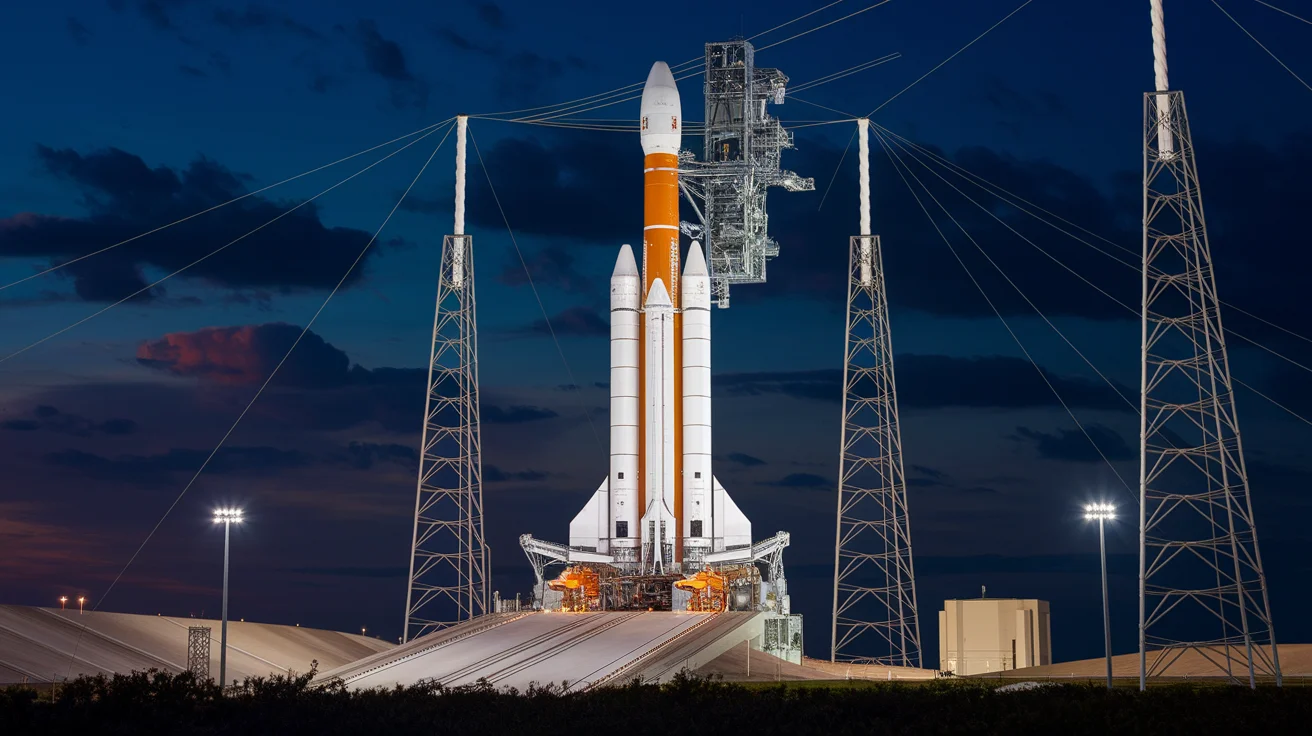
NASA's Artemis II rocket completes second rollout to Kennedy Space Center's Pad 39B following helium system fixes, targeting a launch in early April.
NASA is rolling out its 98-meter tall Space Launch System (SLS) rocket and Orion spacecraft from the Vehicle Assembly Building at Kennedy Space Center in Florida to Pad 39B. This marks the second trip to the pad for the Artemis II mission, which will send astronauts around the Moon for the first time in over 50 years.
The rollout began just after nightfall and involves a slow four-mile journey on the Crawler-Transporter-2, a vehicle built in 1965 that moves at about 1 mph. The rocket, standing taller than Big Ben's clock tower and weighing around 5,000 tonnes, requires this cautious pace to minimize stress on the structure.
Repairs Address Previous Issues
In March, NASA halted a launch attempt due to a problem with the rocket's helium system, which affected the upper stage. Engineers returned the vehicle to the assembly building, replaced suspect components, swapped batteries in critical systems, and conducted tests to confirm the fixes.
Once at the pad, teams will perform pressure tests on the helium system and rehearse countdown procedures using the same computers and networks as on launch day, but without fueling the rocket.
The Artemis II crew includes NASA astronauts Reid Wiseman, Victor Glover, Christina Koch, and Jeremy Hansen. They have entered pre-flight quarantine and will travel to Florida for rehearsals, including suiting up and pad simulations.
NASA targets launch opportunities in the first week of April, with the earliest window at 18:24 Eastern Daylight Time on April 1. Additional windows follow on April 2 through 6, and another on April 30 if needed. The mission will last about 10 days, looping around the far side of the Moon before returning to Earth.
This rollout sets the stage for Artemis II as the first crewed mission in the program, following uncrewed tests. It paves the way for future flights, including Artemis III in 2027 and Artemis IV in 2028, aimed at lunar landings.