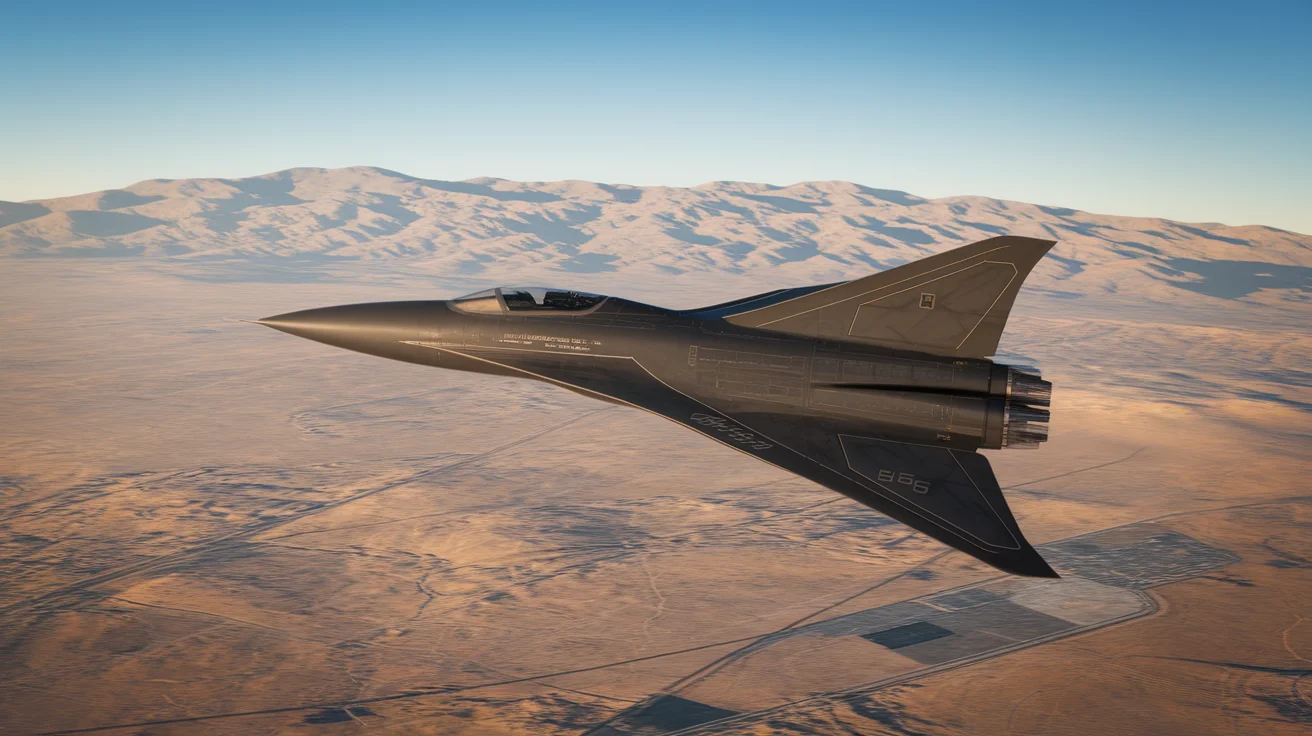
The X-59, part of NASA's Quesst mission, flew briefly on March 20, 2026, before landing safely amid a cockpit warning, marking progress toward quieter supersonic travel.
NASA's X-59 quiet supersonic aircraft successfully completed its second flight on March 20, 2026, taking off from Edwards Air Force Base near NASA's Armstrong Flight Research Center in Edwards, California. The flight began at 10:54 a.m. PDT and was intended to be part of a series of test flights for the year.
During the flight, pilot Jim 'Clue' Less encountered a vehicle system warning in the cockpit several minutes after takeoff. Following standard procedures, the team called for a return to base, resulting in the aircraft landing at 11:03 a.m. PDT. Despite the abbreviated duration, the flight allowed NASA to collect important data for upcoming tests.
Team Reactions and Next Steps
Cathy Bahm, project manager for NASA's Low-Boom Flight Demonstrator at Armstrong Flight Research Center, stated that the early landing was still a positive outcome. 'Despite the early landing, this is a good day for the team. We collected more data, and the pilot landed safely,' Bahm said. She added that the team is eager to resume flights soon.
Pilot Jim Less described the experience as routine, noting, 'As we like to say, it was just like the simulator – and that’s what we like to hear. This is just the beginning of a long flight campaign.' The X-59 is designed to fly faster than the speed of sound while producing only a quiet thump, avoiding traditional sonic booms.
The X-59 serves as the centerpiece of NASA's Quesst mission, aimed at enabling commercial supersonic flights over land. The aircraft will undergo further testing in 2026, including envelope expansion to gradually increase speed and altitude toward supersonic levels, demonstrating its performance and airworthiness.
This second flight builds on the aircraft's initial test, providing insights into its systems and contributing to the mission's goals. NASA plans to conduct dozens of test flights throughout 2026 to refine the technology and gather data for potential future applications in aviation.