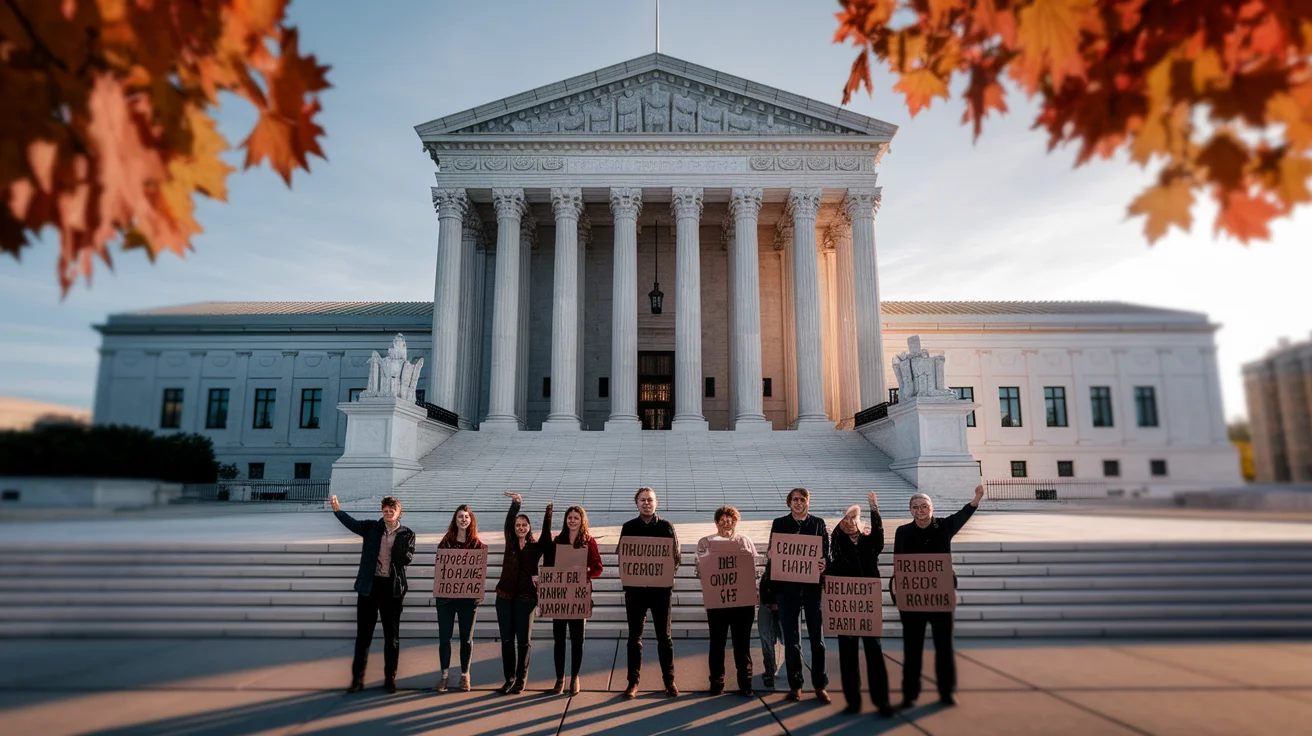
Quebec's secularism law, Bill 21, heads to Canada's Supreme Court, testing the balance between religious freedoms and state neutrality.
Quebec's Bill 21, a law banning religious symbols for public servants such as judges, police officers, and teachers, is under scrutiny at Canada's Supreme Court. The case stems from challenges by groups including the Canadian Civil Liberties Association, with hearings set to begin on Monday.
The legislation, passed in 2019 by Quebec's Coalition Avenir Quebec, aims to enforce state secularism by requiring religious neutrality in public institutions. Critics argue it discriminates against religious minorities, particularly Muslim, Sikh, and Jewish communities, by restricting their ability to wear symbols like hijabs or turbans at work.
What is Bill 21?
Bill 21 specifically bars civil servants in positions of authority from displaying religious symbols while on duty. Supporters view it as a measure to maintain the separation of church and state, similar to secular principles in France, while opponents claim it hinders integration and targets visible minorities.
To shield the law from legal challenges, Quebec invoked the notwithstanding clause, a provision in the Canadian constitution that allows governments to override certain rights, including freedom of religion and equality, for a five-year period.
Background of the Notwithstanding Clause
The notwithstanding clause, Section 33 of the Canadian Charter of Rights and Freedoms, was introduced in the early 1980s during the patriation of the constitution to balance judicial and legislative powers. It permits provinces or the federal government to bypass specific rights, excluding democratic and language rights, though it requires renewal every five years.
Quebec has used the clause multiple times, and other provinces have followed suit recently, such as Ontario for municipal reforms and Saskatchewan for education policies. This has sparked debates about its potential misuse beyond intended limits.
In court documents, the Canadian Civil Liberties Association argues that Bill 21 infringes on individual dignity and rights, potentially setting a precedent for broader abuses. Quebec maintains that the clause protects state neutrality and aligns with constitutional intent, asserting courts should not intervene.
The federal government, as an intervener, seeks clarification on the clause's limits, emphasizing its role in preserving democratic values without allowing unchecked overrides. This case could influence national unity and the balance of power between courts and elected officials across Canada.
More Coverage
- Israeli Police Block Catholic Leaders from Palm Sunday Mass at Holy Site
- Three Arrested in Paris After Foiled Bomb Attack on Bank of America
- BNP Paribas Introduces Six Bitcoin and Ether ETNs for Retail Clients in France
- Canada Proposes Ban on Cryptocurrency Donations to Political Parties Over Foreign Interference Fears