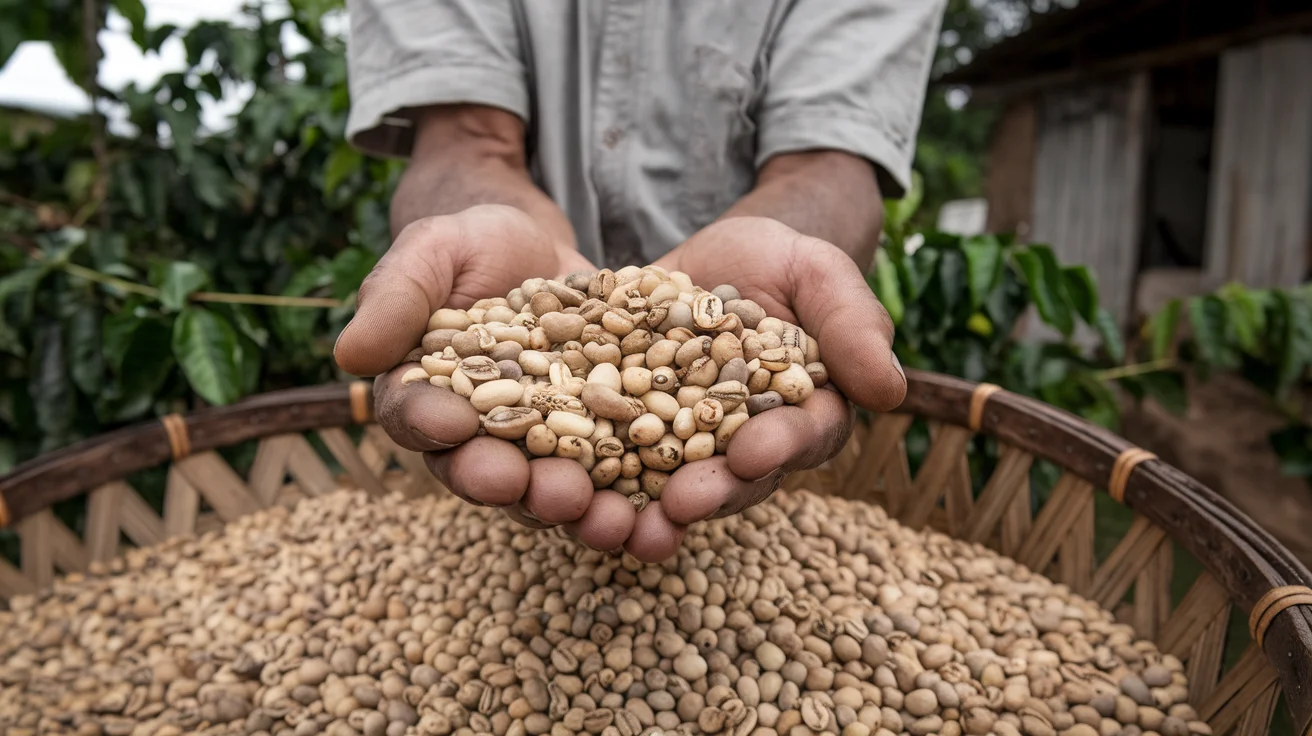
Robusta coffee prices fall amid Brazil's harvest prospects, affecting the commodity's global trade.
Robusta coffee futures have fallen to a seven-month low, primarily due to expectations of a strong harvest in Brazil, a key producer. This price drop reflects increased supply anticipation in the market, as traders respond to weather forecasts and crop reports from the region.
What is Robusta Coffee?
Robusta coffee, or Coffea canephora, is a hardy species that thrives in warmer climates and is less susceptible to diseases than Arabica coffee. It accounts for about 40 percent of global coffee production and is mainly grown in countries like Brazil, Vietnam, and Indonesia, making it a staple in blends for instant coffee and espresso.
Brazil, the world's largest coffee exporter, plays a pivotal role in robusta supply. Recent reports indicate favorable weather conditions have boosted harvest expectations, leading to an oversupply outlook that pressures prices downward. This situation contrasts with past years when droughts or pests reduced yields and drove prices up.
The global coffee market operates through futures exchanges, where prices fluctuate based on supply and demand dynamics. For robusta, key factors include harvest volumes in major producers, global consumption trends, and economic conditions in importing countries. In 2026, analysts noted that Brazil's projected output could exceed 60 million bags, contributing to the current price decline.
Market Influences on Coffee Prices
Beyond harvest hopes, robusta prices are influenced by global demand from roasters and consumers, particularly in Europe and Asia. For instance, rising consumption in emerging markets like India has historically supported prices, but an abundant supply can offset this effect. Trade policies, such as tariffs on coffee imports, also play a role, though no major changes have been reported recently.
In the broader context, coffee prices are tracked on exchanges like the Intercontinental Exchange (ICE), where robusta contracts are traded. The recent low of around $2,000 per ton for robusta futures underscores how supply gluts can lead to volatility. This event follows a period of stability in 2025, when prices hovered near $2,500 per ton amid balanced supply.
Looking ahead, stakeholders in the coffee industry, including farmers and traders, monitor weather patterns and export data closely. If Brazil's harvest meets or exceeds expectations, prices may remain low through mid-2026, potentially affecting smaller producers in Africa and Asia who rely on higher prices for sustainability. This dynamic illustrates the interconnectedness of global agriculture and trade.
Overall, the robusta coffee market's current state serves as a reminder of how environmental and production factors can swiftly alter commodity values. Consumers might see stable or lower coffee prices in the short term, while producers adjust strategies to cope with the shift.
More Coverage
- Russian Oil Output Cuts Inevitable as Drone Attacks Reduce Exports, Sources Say
- Raja Ravi Varma's Painting Sells for Record $17.9 Million in Indian Art Auction
- Countries Consider Wealth Taxes on Ultrarich Amid Inequality and Budget Needs
- U.S. Lifts Sanctions on Venezuela's Acting President Delcy Rodríguez