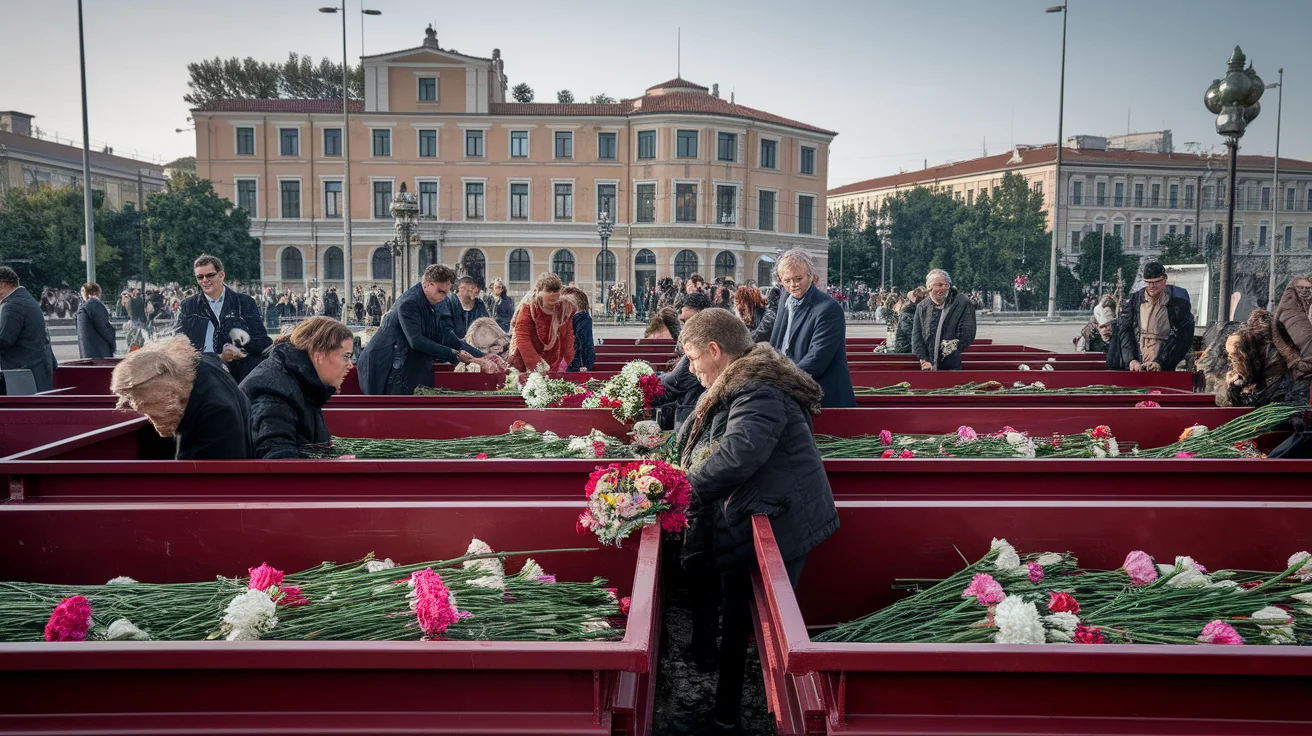
Annual commemorations in Thessaloniki honor the victims of the Holocaust, as Greece addresses the near-total destruction of its Jewish population and plans a new museum.
Thessaloniki, once known as the 'Jerusalem of the Balkans,' was home to a thriving Sephardic Jewish community that faced near-total annihilation during World War II. In March 1943, approximately 48,000 Jews were deported from the city by Nazi forces, primarily to Auschwitz-Birkenau, marking one of the largest such operations in Europe.
The city's Jewish population, which made up about half of its residents in the early 20th century with estimates of 60,000 to 62,000 people, was reduced to roughly 2,000 survivors after the war. Many victims were descendants of Sephardic Jews who had settled in the Ottoman Empire centuries earlier, creating a cultural melting pot of languages like Ladino, Greek, and Turkish.
Annual Memorials and Personal Stories
Survivors and descendants, such as Renee Revah, commemorate the tragedy through annual marches to the old train station, the site of deportations. Revah shared that her grandfather's relatives were deceived into boarding trains, believing they were headed for labor, only to be murdered in concentration camps.
Students like Savvina Mermigka and Filippos Mermigkas participate in these events, emphasizing the need for education to counter misconceptions. They noted a rise in antisemitism in Greece, with incidents including graffiti and attacks on Jewish sites, as reported by the General Secretariat for Religious Affairs over the past eight years.
Greece has recorded nearly 60 antisemitic incidents since recent years, with a spike following events in October 2023, according to the Central Board of Jewish Communities. This trend is linked to limited historical education in schools about Jewish life and the Holocaust in Greece.
To address this, construction of a Holocaust museum in Thessaloniki began in early 2024, with an expected opening in 2028. The project, first proposed in 2013, aims to preserve shared European cultural memory, as highlighted during German President Frank-Walter Steinmeier's visit in October 2024.
Post-war silence on the atrocities delayed reconciliation, but recent efforts in Greece and Germany focus on the fate of Sephardic Jews, integrating their story into broader Holocaust remembrance.
More Coverage
- Lufthansa Marks 100th Anniversary Amid Strikes and Economic Challenges
- Syrian President Al-Sharaa Declares Neutrality in US-Israeli Conflict with Iran Unless Attacked
- Israelis Attempt Passover Sacrifice at Al-Aqsa Mosque, Leading to Arrests
- Israel Announces Plan to Retain Control of Southern Lebanon Buffer Zone Post-War