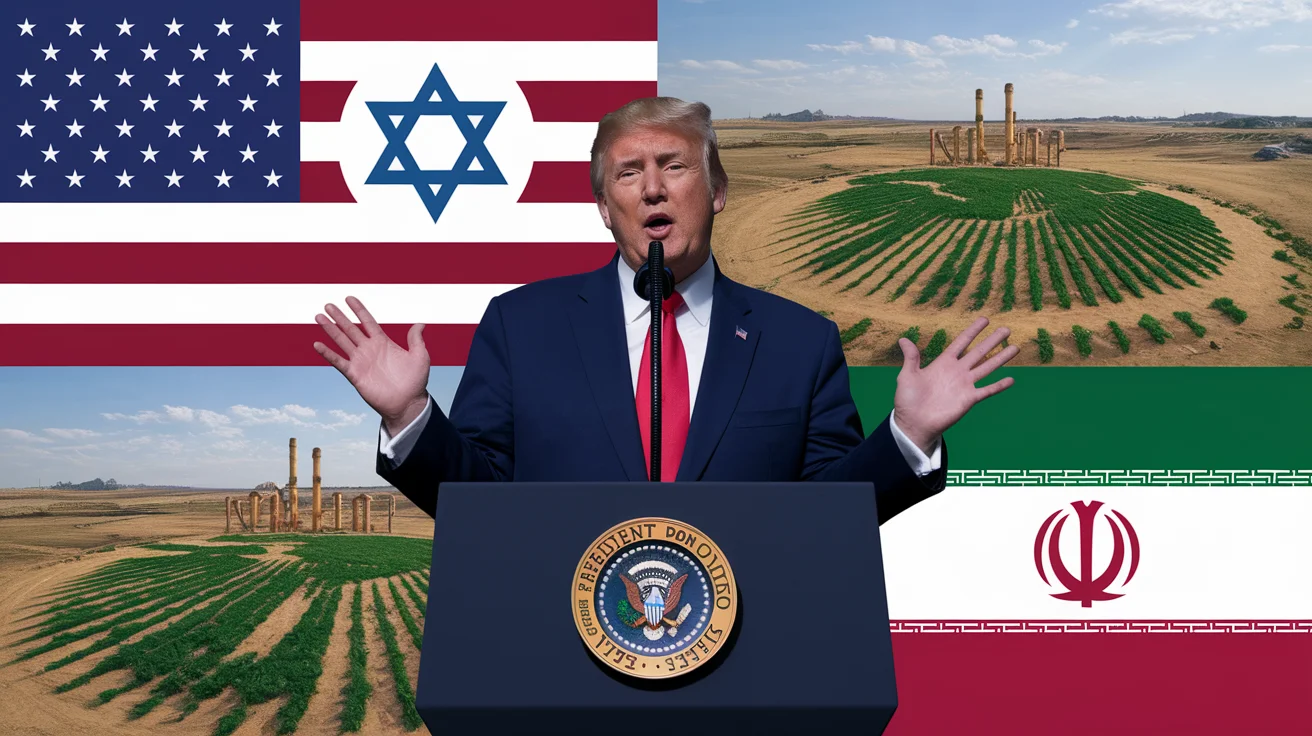
Trump's comments raise questions about U.S.-Israel coordination after attacks on shared Iran-Qatar gas facilities, amid ongoing regional conflicts.
U.S. President Donald Trump posted on Truth Social denying any U.S. involvement in Israel's strike on Iran's South Pars gas field, part of the world's largest natural gas reserve shared with Qatar. The attack occurred on Wednesday, leading to Iranian retaliation against Qatari energy sites and a subsequent spike in global energy prices.
Israeli sources, including reports from newspapers like Yedioth Ahronoth and Israel Hayom, claimed the strike was coordinated with the U.S. and discussed by Trump with Gulf state leaders. Trump contradicted these reports, asserting the U.S. 'knew nothing' about the operation, though he described Israel's actions as a 'violent lashing out' in anger.
Trump's Warnings and Threats
In his post, Trump warned that Israel would make 'no more attacks' on the South Pars field unless Iran strikes Qatar again. He threatened that the U.S. would 'massively blow up' the entire field if such an attack happened, emphasizing potential U.S. action with or without Israeli consent.
Trump also noted that Iran may have mistakenly believed Qatar was involved in the initial strike, leading to its retaliation. This suggests possible miscommunications in the escalating conflict, as energy prices continue to rise due to the instability.
While U.S. and Israeli officials maintain alignment on broader goals like countering Iran's military capabilities, differences emerge in strategy. Israel has focused on targeting Iranian leadership and infrastructure to undermine the regime, contrasting with U.S. efforts to degrade Iran's missile and naval assets.
Israeli embassy spokesman Alex Gandler stated that the two nations share objectives regarding Iran's nuclear and ballistic programs. However, reports indicate Israel's actions, such as the gas field attack, aim to provoke internal unrest in Iran, a priority less emphasized by the U.S.
The conflict has broader effects, including potential impacts on global shipping through the Strait of Hormuz and U.S. domestic politics, where support for the war varies. Trump's statements reflect impatience amid these developments, as the situation remains fluid with no immediate resolution in sight.