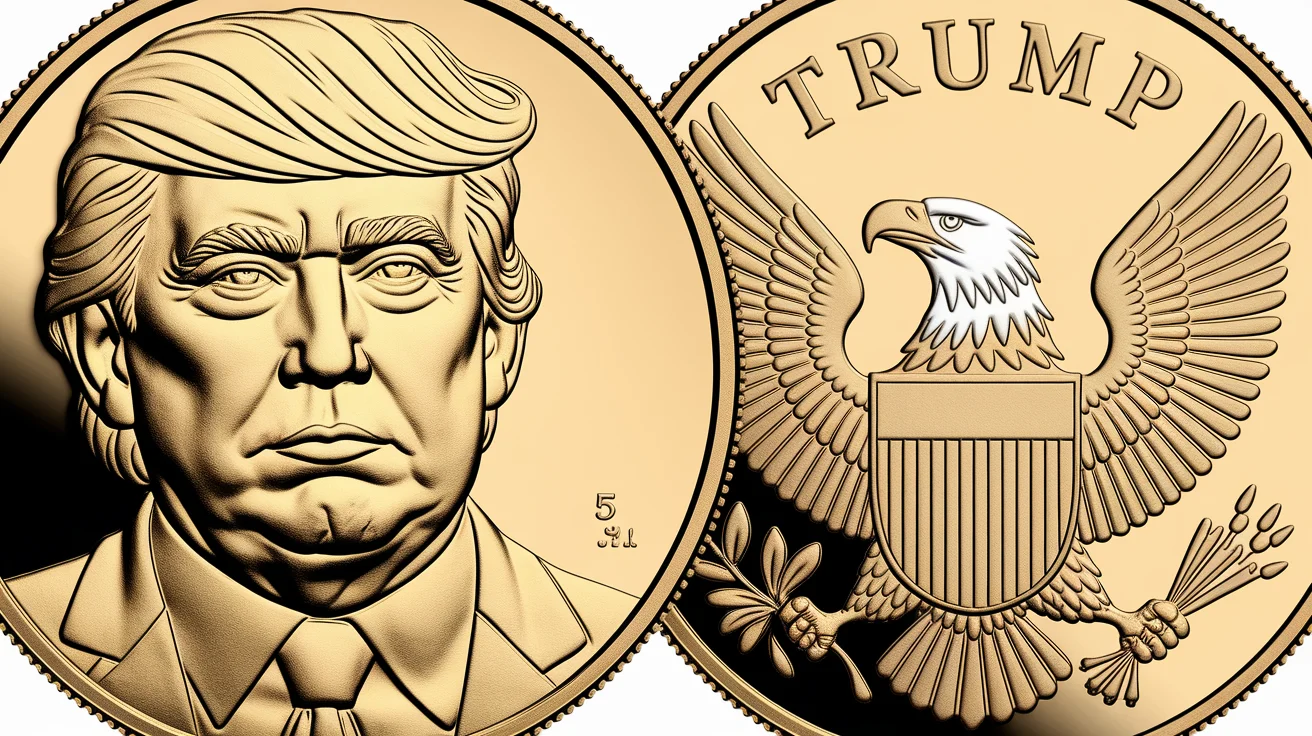
Federal agency approves gold coin with Trump's face for commemorative purposes, despite laws against depicting living presidents on currency.
The United States Commission of Fine Arts, a federal agency, voted unanimously to approve a commemorative gold coin featuring Donald Trump's portrait. The design draws from a black-and-white image of Trump displayed in the National Portrait Gallery in Washington, D.C.
The coin will show Trump leaning on a table with both fists, staring ahead, paired with a bald eagle on the reverse side. This approval occurred during a meeting where Trump's appointees made up the commission.
Coin Details and Legal Context
The commemorative gold coin is not intended for circulation as currency, potentially avoiding federal laws that prohibit depicting living presidents on U.S. currency. However, the Trump administration is also pursuing plans to feature his image on a $1 coin, which critics argue violates these laws.
Senator Jeff Merkley criticized the initiatives, stating that such actions are typical of monarchs and dictators, not democratic leaders. The Citizens Coinage Advisory Committee, a bipartisan panel, has previously opposed Trump-themed coins but expects the commission to proceed.
Trump aide Chamberlain Harris, recently appointed to the commission, described the coin as a strong and tough image of the president. The U.S. Mint aims to produce the largest possible version, up to 7.6 centimeters in diameter, as per discussions with Trump.
Acting chief Megan Sullivan at the Office of Design Management confirmed that Trump approved the design after reviewing options presented by the Treasury secretary. This approval aligns with Trump's broader efforts to mark his presence on federal symbols, including naming changes at institutions like the U.S. Institute of Peace and the Kennedy Center.
These efforts have faced lawsuits, particularly regarding the Kennedy Center, which Congress designated as a memorial to John F. Kennedy. Trump's actions also include placing his face on government buildings and altering Washington, D.C.'s architecture, such as demolishing the White House East Wing for a ballroom and planning a triumphal arch.