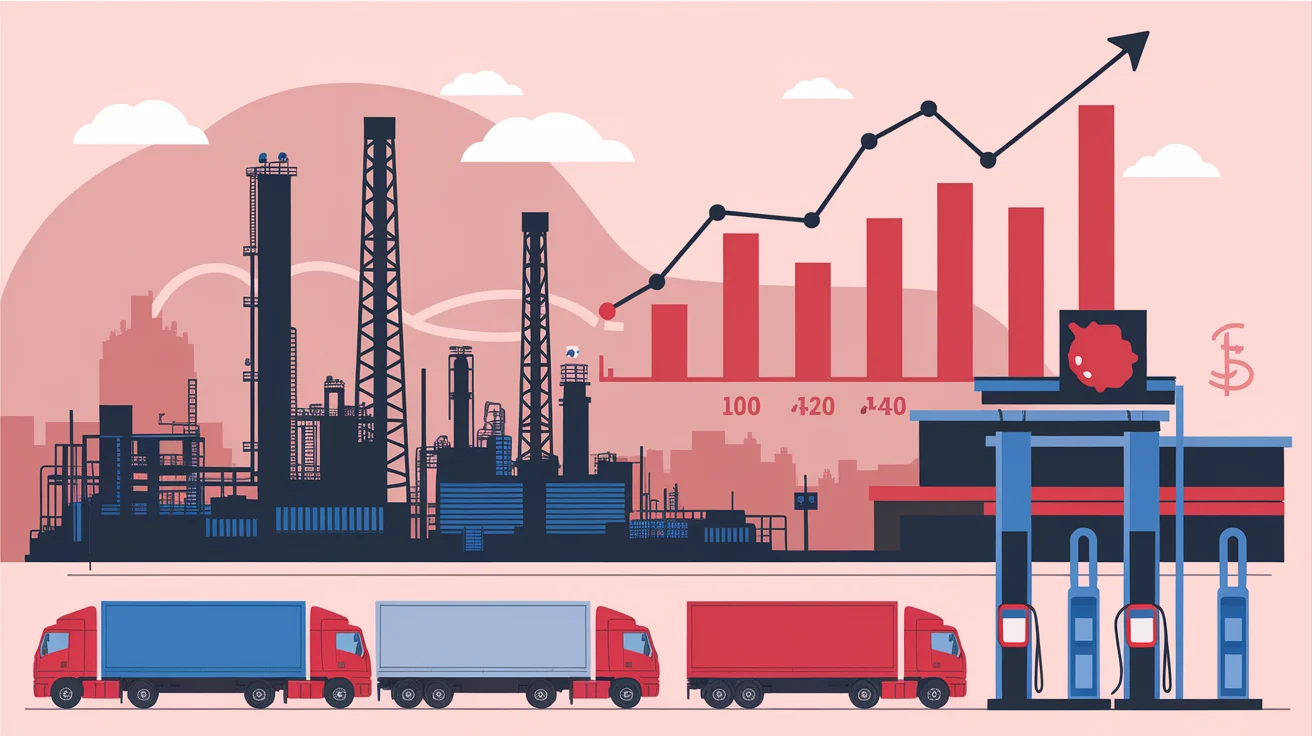
An overview of the US diesel shortage, its potential causes, and economic effects based on available reports.
The US is experiencing a tightening in diesel supplies, which could lead to higher fuel prices and affect various industries, as reported by Bloomberg. This shortage, noted in early 2026, involves reduced availability of diesel fuel, a critical component for trucks, buses, and heavy machinery.
Diesel makes up a significant portion of the US energy market, powering about 70% of freight transportation according to industry data. The squeeze may stem from factors such as refinery outages, increased global demand, or geopolitical tensions affecting oil imports, though exact causes remain unclear from available sources.
What is the Diesel Squeeze?
The term 'diesel squeeze' refers to a situation where supply fails to meet demand, leading to price spikes. In the US, diesel prices have historically influenced inflation rates, with recent reports indicating potential increases that could add pressure on consumer goods costs.
Reports suggest that this shortage might be linked to broader energy market dynamics, including disruptions in global oil production. For instance, events in major oil-exporting regions could indirectly impact US stocks, though specific details are not fully confirmed.
Economic Impacts
The potential ripple effects include higher transportation costs, which could raise prices for food, clothing, and other essentials. Businesses reliant on diesel-powered vehicles, such as logistics and agriculture, may face operational challenges, potentially slowing economic growth.
If the shortage persists, it could strain the national supply chain, affecting employment in affected sectors. According to economic analyses cited in reports, prolonged fuel shortages have previously led to GDP declines in similar scenarios.
Government responses might include releasing emergency oil reserves or adjusting import policies, but outcomes depend on ongoing developments. Consumers and businesses are advised to monitor fuel prices closely as the situation evolves.
In summary, the US diesel squeeze highlights vulnerabilities in the energy sector, underscoring the need for diversified fuel sources to mitigate future risks. While immediate effects are localized, global trade patterns could amplify the issue if not addressed promptly.