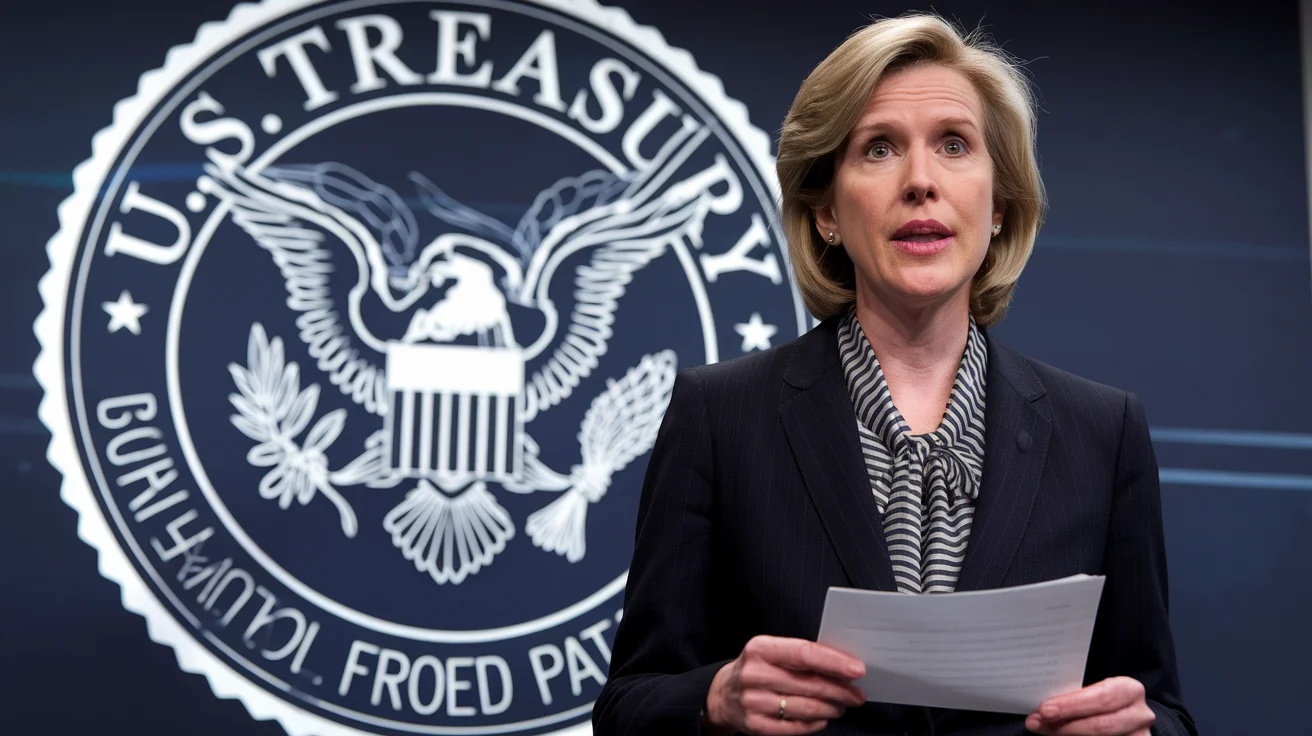
U.S. Treasury official Bessent clarifies no government intervention in energy derivatives, providing context on market operations.
U.S. Treasury official Scott Bessent announced that the U.S. government has not intervened in energy derivatives markets, as reported by Bloomberg. This statement addresses concerns about potential government actions in volatile energy sectors.
What Are Energy Derivatives?
Energy derivatives are financial instruments that derive their value from underlying energy assets, such as oil, natural gas, or electricity futures. These contracts allow traders to hedge against price fluctuations or speculate on market movements without physically owning the energy resources.
In the U.S., energy derivatives are primarily traded on exchanges like the New York Mercantile Exchange (NYMEX). They play a crucial role in price discovery and risk management for energy producers, consumers, and investors.
Bessent's denial highlights the U.S. policy of maintaining free-market principles in derivatives trading, where interventions are rare and typically occur only in cases of market emergencies, such as during the 2008 financial crisis.
Context of Energy Markets
Global energy markets have faced instability due to factors like geopolitical tensions and supply disruptions. For instance, events in oil-producing regions can lead to sharp price swings, prompting questions about regulatory responses.
The U.S. has historically monitored these markets through agencies like the Commodity Futures Trading Commission (CFTC), which oversees derivatives to prevent manipulation. Bessent's statement reassures that no specific interventions have occurred recently in energy derivatives.
According to reports, this clarification could influence investor confidence, as energy derivatives markets involve trillions in annual trades. It remains unclear if future interventions might be considered under changing circumstances.
Energy derivatives also intersect with broader economic policies, such as inflation control and energy security. Stakeholders, including traders and policymakers, use these instruments to navigate economic uncertainties.