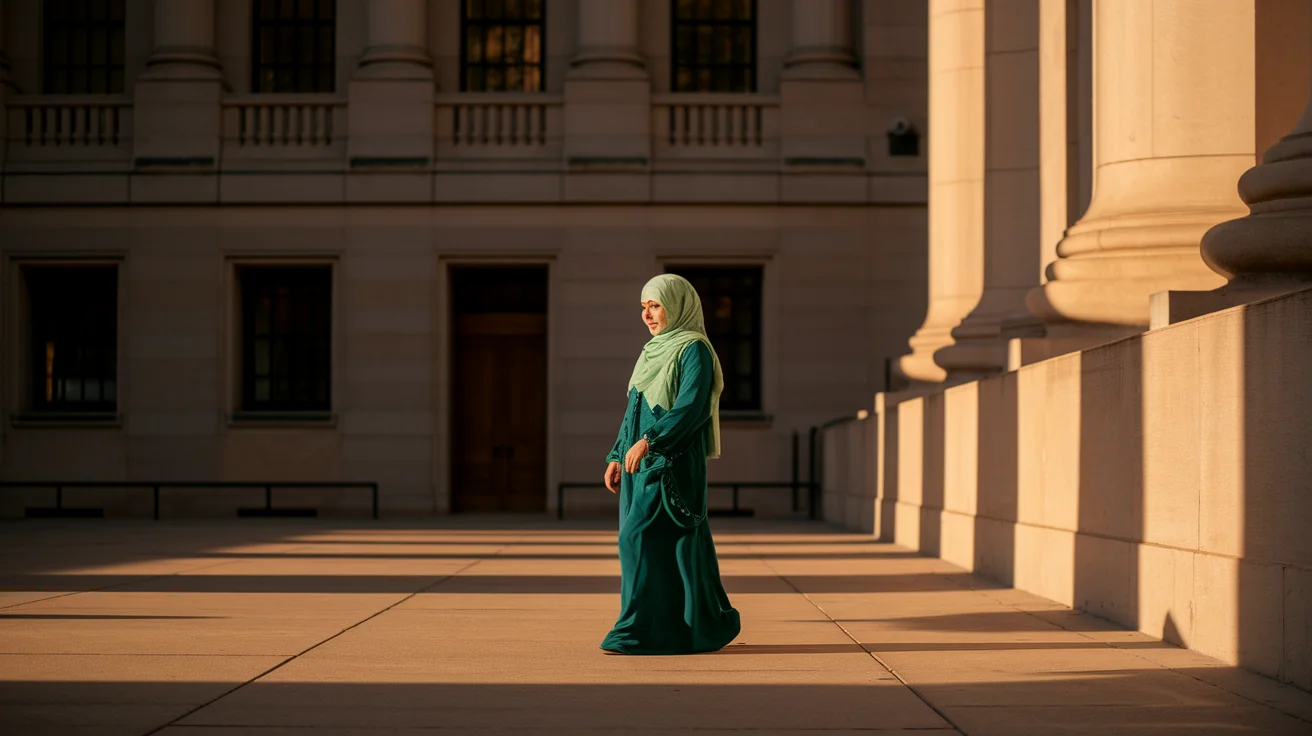
Quebec's secularism law, barring religious attire for certain public employees, heads to the Supreme Court amid claims it discriminates against religious minorities.
Quebec's Bill 21, enacted in 2019, prohibits public sector workers in positions of authority, such as judges, police officers, and teachers, from wearing religious symbols at work. Muslim women like Lisa Robicheau, a 41-year-old contract support worker in Montreal's English-language school system, say the law has made them feel like outsiders in their own province.
Robicheau, who wears a hijab, fears for her job security and has enrolled in university to explore other career options, potentially outside Quebec. She told the BBC that she has spent most of her life in the province but constantly feels treated as an outsider due to the law's impact.
Supreme Court Hearing Begins
The Supreme Court of Canada will hold a four-day hearing starting Monday in Ottawa to address a constitutional challenge to Bill 21. Challengers include the Canadian Civil Liberties Association, the National Council of Canadian Muslims, and the English Montreal School Board.
Researcher Nadia Hasan from York University found that 73% of over 400 Muslim women surveyed in Quebec reported the law affected their job searches, with a similar percentage considering leaving the province. More than half experienced racist remarks or prejudice at work, leading some to seek employment in Muslim-owned businesses and raising concerns about social segregation.
Proponents, including Quebec Premier François Legault, argue that Bill 21 promotes secularism and coexistence in the French-speaking province. The law draws from historical events like the Quiet Revolution of 1960, which separated church influence from public institutions, and similar policies in France that banned religious attire in schools since 2004.
Other religious minorities, such as Sikhs and Jews, have also reported impacts, with Amrit Kaur, a Sikh teacher, relocating to British Columbia after the law blocked her career in Quebec. Polls show majority support in Quebec, with 61% favoring a ban on public prayer and 56% supporting religious attire bans in daycares.
The Quebec government seeks to expand the law to include all public school staff and daycare centers, though exemptions apply to those employed before its implementation. Lower courts upheld the law using the notwithstanding clause, making this Supreme Court case pivotal for evaluating that constitutional provision.