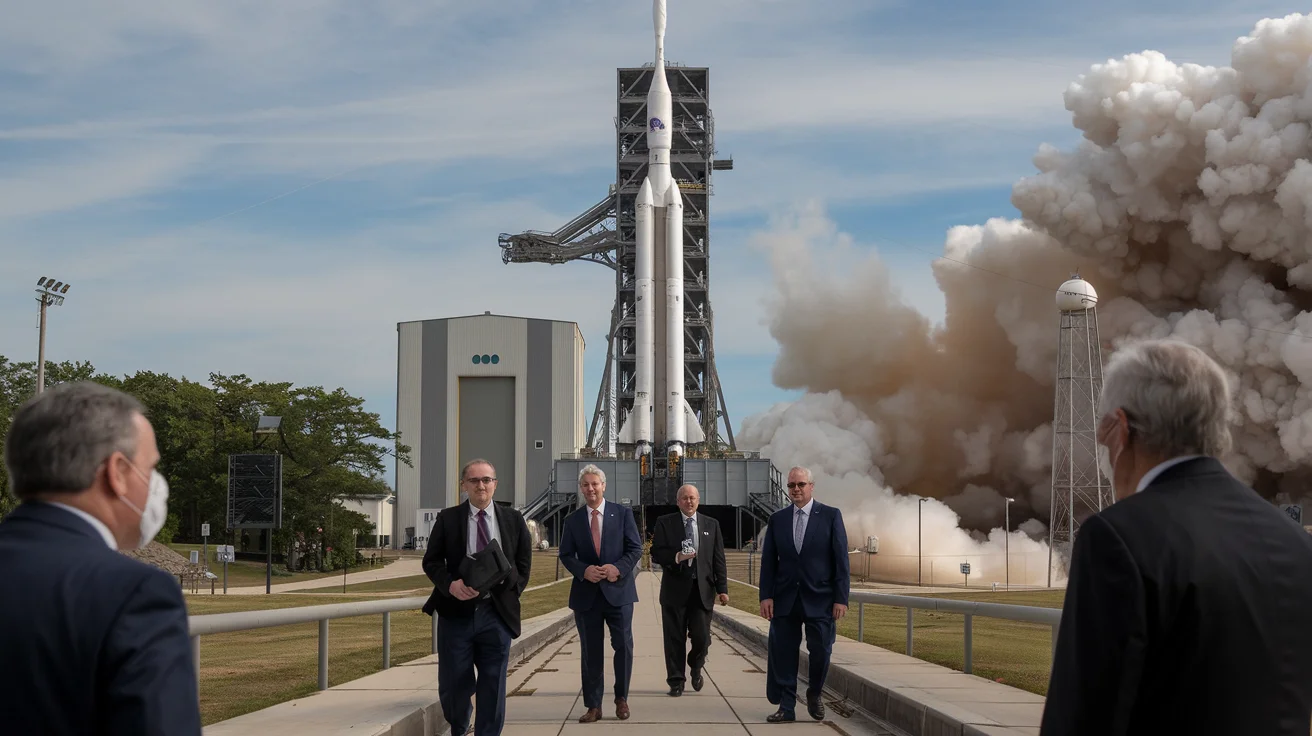
Celebrating the 100th anniversary of Robert Goddard's pioneering rocket test, which used liquid oxygen and gasoline to achieve the first successful flight.
On March 16, 1926, American physicist and inventor Dr. Robert H. Goddard launched the world’s first liquid-fueled rocket from his aunt’s farm in Auburn, Massachusetts. This event marked a pivotal moment in rocketry history, as Goddard’s design used liquid oxygen and gasoline as propellants, differing from earlier solid-fueled rockets.
Details of the Historic Launch
The rocket flew for 2.5 seconds, reaching an altitude of 41 feet and traveling 184 feet before landing in a cabbage patch. Though modest in scale, this test demonstrated the feasibility of liquid fuels, which provided greater control and efficiency compared to solid propellants.
Goddard’s innovation built on his earlier experiments, including work on rocket designs and fuel systems. He patented several technologies, such as steering mechanisms and fuel pumps, which addressed key challenges in rocket stability and performance.
Over his career, Goddard conducted more than 50 rocket tests, refining his inventions and laying groundwork for future advancements. His work influenced the development of missiles during World War II and the space programs of the mid-20th century.
The success of Goddard’s 1926 launch enabled humanity’s space achievements, including Moon missions and satellite deployments. Today, liquid-fueled rockets remain essential for tasks like launching spacecraft to explore the solar system and monitor Earth.
Goddard’s contributions extended to practical applications, such as creating pivotable engines for better rocket control. His legacy is preserved in archives, including photographs from his wife Esther Goddard at Clark University, highlighting the personal and scientific aspects of his pioneering efforts.
In recognition of this milestone, NASA and other organizations continue to honor Goddard’s role in space exploration. His inventions have directly supported modern missions, from the Apollo program to current endeavors like the Artemis initiative.