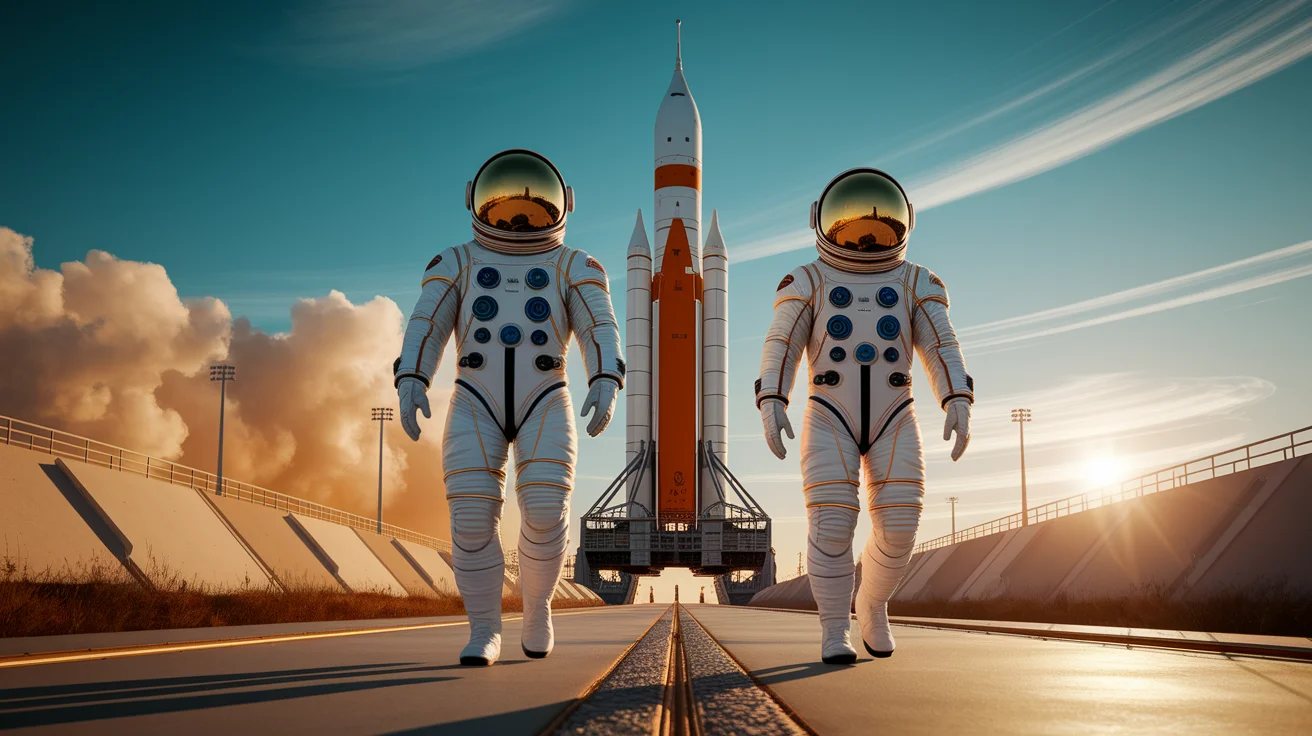
NASA outlines coverage for Artemis II, including crew details and launch events.
NASA has scheduled the Artemis II mission as the first crewed flight under its Artemis program, featuring astronauts Reid Wiseman, Victor Glover, and Christina Koch from NASA, along with Jeremy Hansen from the Canadian Space Agency. The mission will involve a 10-day journey around the Moon, testing the Orion spacecraft's life support systems with humans aboard for the first time.
Launch Timeline and Preparations
The target launch date is no earlier than April 1, with a two-hour window opening at 6:24 p.m. EDT from NASA's Kennedy Space Center in Florida. Additional launch opportunities extend through April 6, using the Space Launch System rocket to propel the crew.
Artemis II builds on previous tests, including a recent integrated systems test at Kennedy Space Center on September 20, where the crew practiced launch day procedures. This mission aims to lay the groundwork for future lunar explorations.
NASA will provide live coverage of pre-launch events, the launch itself, and mission operations through its YouTube channel and NASA+ platform. Events include 24-hour mission updates and dedicated streams for key moments.
Key Events and Media Access
On March 27, the Artemis II crew will arrive at Kennedy Space Center and hold a briefing with NASA Administrator Jared Isaacman and Canadian Space Agency President Lisa Campbell. Further events include virtual crew questions on March 29 and status updates on March 30 and 31.
For media, accreditation for in-person coverage has closed, but phone participation is available by contacting specified NASA email addresses. Briefings will occur from Kennedy Space Center initially, shifting to Johnson Space Center on April 2.
All event times are subject to change and listed in Eastern Time. Viewers can access NASA content via various online platforms, with inquiries directed to NASA email for transmission details.
The mission underscores NASA's commitment to lunar exploration, with the crew set to orbit the Moon and return, marking a significant step in human spaceflight.