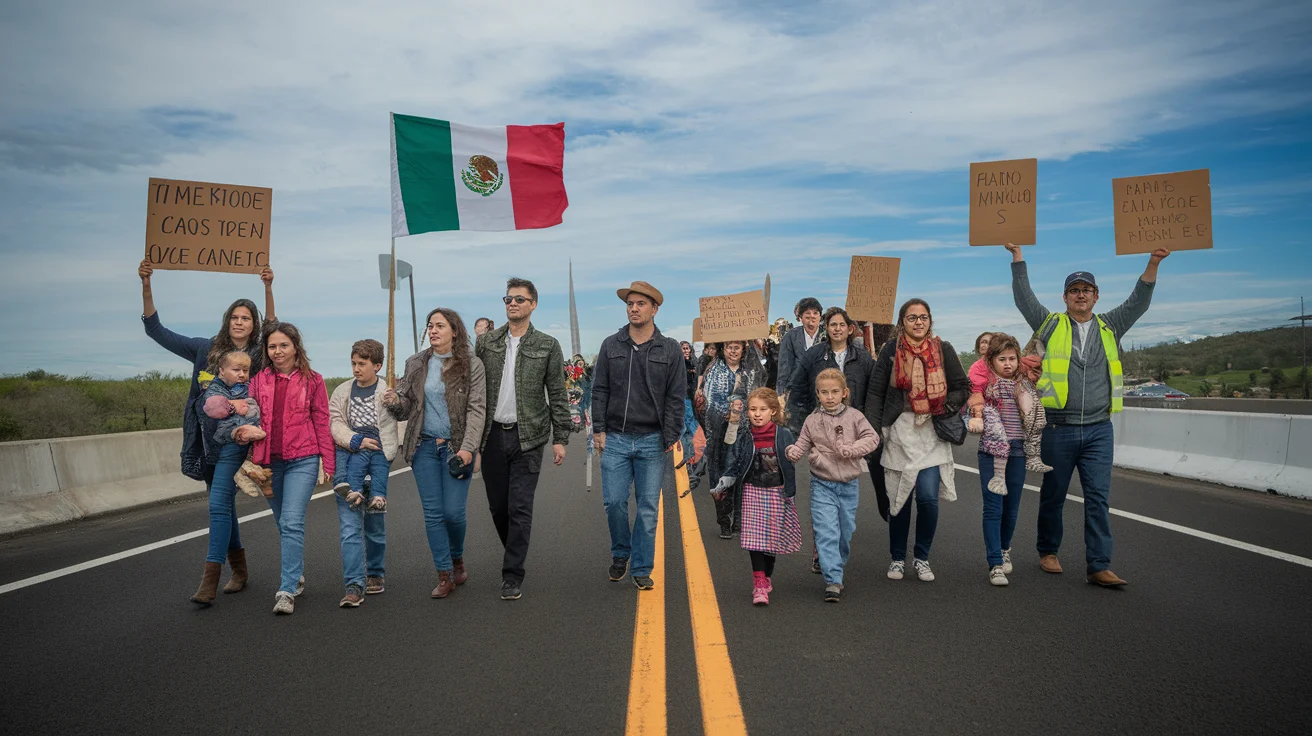
Migrants in southern Mexico demonstrate against immigration hurdles as U.S. court questions possible secret deportation deals.
About 500 migrants and asylum seekers began a march in southern Mexico on March 25, starting from Tapachula in Chiapas state near the Guatemala border. The group walked along the highway, highlighting their frustrations with the immigration system.
Participants cited long lines for legal status applications and restrictions on their movements as major barriers to finding jobs and accessing free documentation. Some reported being asked to pay nearly $2,300 for processes that are legally free, according to the Southern Border Monitoring Collective.
Challenges Faced by Migrants
Joandri Velazquez Zaragoza, a 40-year-old Cuban national, stated, 'Without papers, there are no opportunities. We migrants feel like prisoners in Tapachula.' Advocates also denounced increased militarization near Mexico's borders as a threat to migrant safety.
Mexico has intensified immigration enforcement due to U.S. pressure, especially under President Donald Trump's second term, which includes mass deportation campaigns. Irregular border crossings from Mexico into the U.S. have dropped as a result.
In a U.S. court, Judge William Young in Boston questioned claims of a secret deportation agreement between the U.S. and Mexico. Lawyers for the Trump administration mentioned an unwritten deal to accept 6,000 Cubans, but the U.S. Department of Homeland Security did not respond to requests for comment.
The march, named 'Caravana Genesis 2026,' continued into Wednesday, with participants carrying signs and children. Photos showed migrants walking with national flags, emphasizing their diverse origins and shared struggles.
Advocates reported that migrants in Mexico face risks such as abuse from cartels and law enforcement, as well as kidnapping and extortion, adding to the urgency of their demands for better treatment and faster processing.