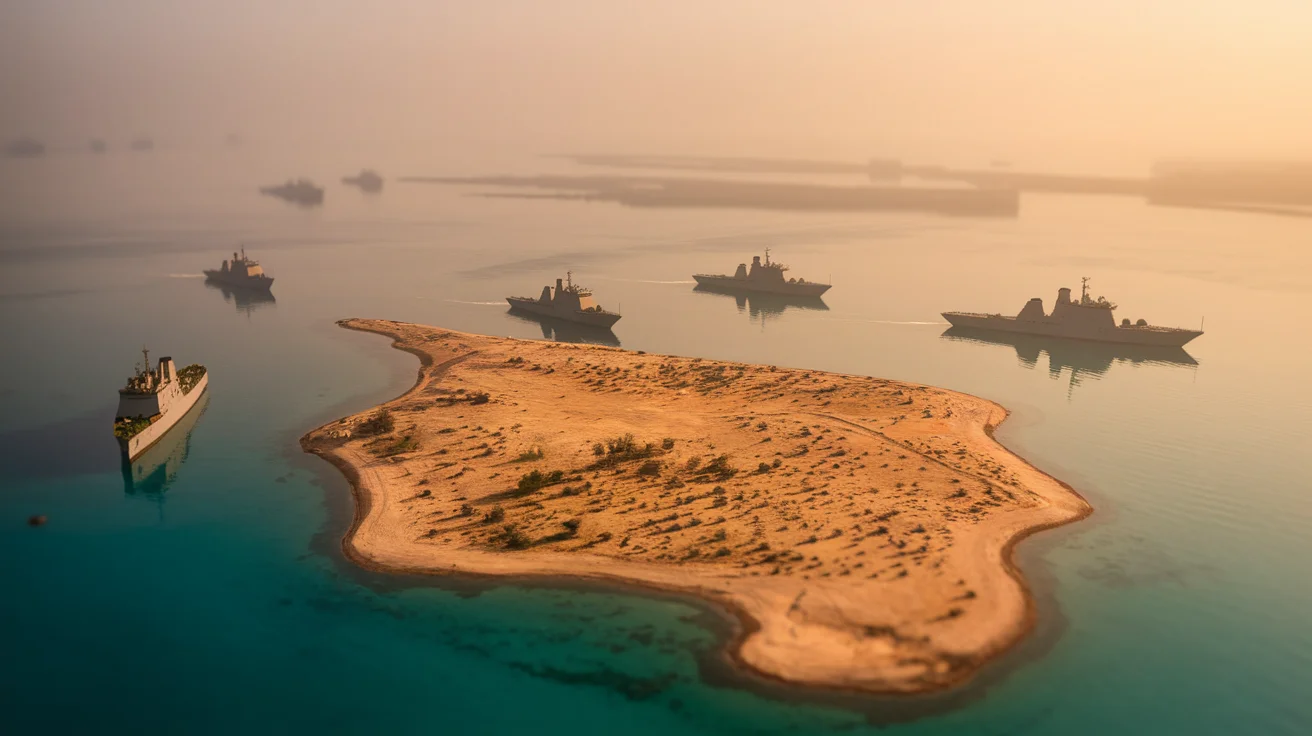
Tehran issues a stern warning regarding threats to an Iranian island, as US forces deploy more troops to the region.
Iran's parliament speaker, Mohammad Bagher Ghalibaf, warned on March 26, 2026, that any attempt by "Iran's enemies" to occupy an Iranian island with regional support would trigger targeted attacks on the assisting country's vital infrastructure.
Ghalibaf stated in social media posts that Iranian forces are monitoring enemy movements and would respond with continuous attacks if such an operation occurs, though he did not name the island or the regional country.
US Military Deployments Escalate Tensions
US President Donald Trump claimed ongoing negotiations with Iran to end the conflict, which Iran has denied, while the White House threatened further action if Iran does not accept defeat.
White House Press Secretary Karoline Leavitt announced that approximately 2,000 soldiers from the US Army’s 82nd Airborne Division are deploying to the Gulf, joining two Marine Expeditionary Units already en route.
Al Jazeera's Mohamed Vall reported from Tehran that Iranians are aware of the US military buildup and believe it signals continued war, with some suggesting the United Arab Emirates might be the regional country referenced in Ghalibaf's warning.
An unnamed Iranian military source, cited by the semi-official Tasnim news agency, said Iran could open a new front at the Bab al-Mandeb Strait if actions occur on Iranian islands, and that Iran-backed Houthi rebels in Yemen are prepared to assist if needed.
Amid these developments, mediators are working behind the scenes to relay messages between the US and Iran, with the US proposing a 15-point plan and Iran outlining five conditions for ending hostilities, according to reports.