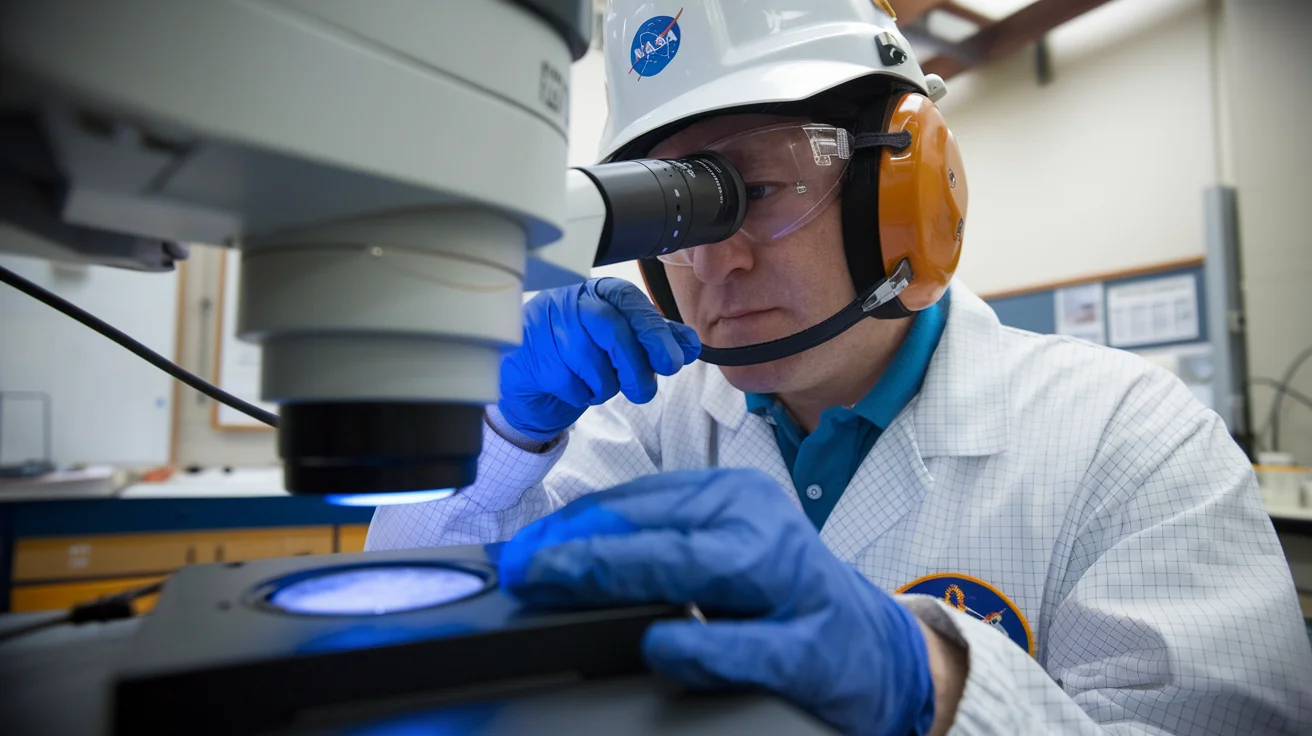
NASA advances welding technology by resolving defects in self-reacting friction stir welding through data-driven methods.
NASA's Engineering and Safety Center (NESC) has developed new techniques to enhance self-reacting friction stir welding (SRFSW), a solid-state process used for joining metals without melting them.
The improvements addressed root causes of poor tensile strength and low topography anomalies (LTA) in welds, which had previously constrained flight hardware production.
Techniques Employed in the Assessment
The NESC team utilized machine learning to detect LTA in weld images, training models on expert-annotated data from over 100,000 microscopy images to ensure objective analysis.
They created an integrated data-ingestion framework in Python to handle diverse data types from the welding process, reducing errors and improving efficiency for ongoing use.
A web-based tool was developed for visualizing and analyzing the data, allowing engineers to test hypotheses quickly and gain insights into weld parameters.
The team applied a space-filling design of experiments to explore complex parameter interactions, developing software to generate these designs for stakeholders.
Physics-based simulations modeled the SRFSW process, providing insights into microstructure evolution and guiding process improvements.
Outcomes and Applications
The assessment identified overly aggressive post-weld surface preparation and suboptimal weld power input as key issues, leading to recommendations that eliminated low-strength welds and LTA.
Follow-up tests confirmed the adjustments, enabling reliable production of high-performance alloys like Aluminum 2219 for applications such as NASA's Space Launch System rocket.
SRFSW involves a rotating pin that generates heat through friction to fuse metal plates, producing stronger joints than traditional methods and supporting aerospace manufacturing at NASA's Michoud facility.