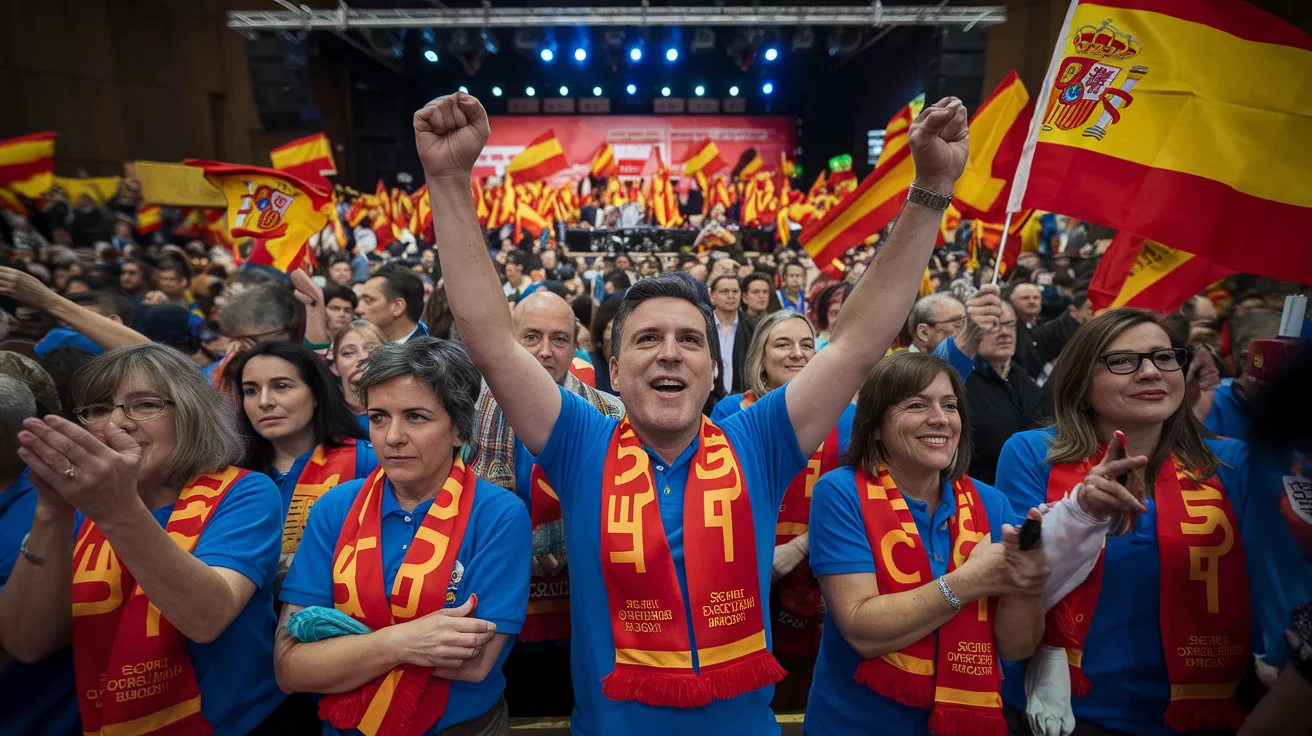
Spain's Socialists gain ground as the far-right falters, marking a potential shift in the country's political landscape.
Spain's Socialist Workers' Party, under Prime Minister Pedro Sanchez, has announced a political resurgence based on recent electoral gains and polling data. This development comes amid reports of declining support for far-right parties in Spain.
Background on Spanish Politics
The Spanish Socialist Workers' Party, or PSOE, has been a dominant force in Spanish politics since the country's transition to democracy in the 1970s. Pedro Sanchez became prime minister in 2018 after a no-confidence vote removed the previous government, marking a shift from conservative rule.
Far-right parties, such as Vox, emerged prominently in the 2010s amid economic crises and regional tensions, including Catalonia's independence movement. Vox gained seats in parliament starting in 2019, challenging the established parties with nationalist and anti-immigration platforms.
In recent elections and surveys, Vox and similar groups have experienced setbacks, possibly due to economic recovery efforts and public backlash against their policies. This faltering has allowed the Socialists to reclaim momentum, as evidenced by increased voter support in regional votes.
Sanchez's government has focused on social reforms, including labor rights and environmental policies, which may be contributing to their current popularity. These efforts contrast with the far-right's emphasis on traditional values and strict immigration controls.
The turnaround for the Socialists could influence future national elections, potentially stabilizing Spain's coalition governments. Observers note that economic factors, such as inflation and unemployment rates, play a key role in voter sentiment.
Historically, Spain's political landscape has been shaped by events like the 2008 financial crisis and the COVID-19 pandemic, which amplified divisions. The current shift underscores the fluid nature of European politics, where economic stability often sways public opinion.
As Spain navigates these changes, the balance of power between left-leaning and far-right factions remains a critical factor in policy decisions, including EU relations and domestic reforms.