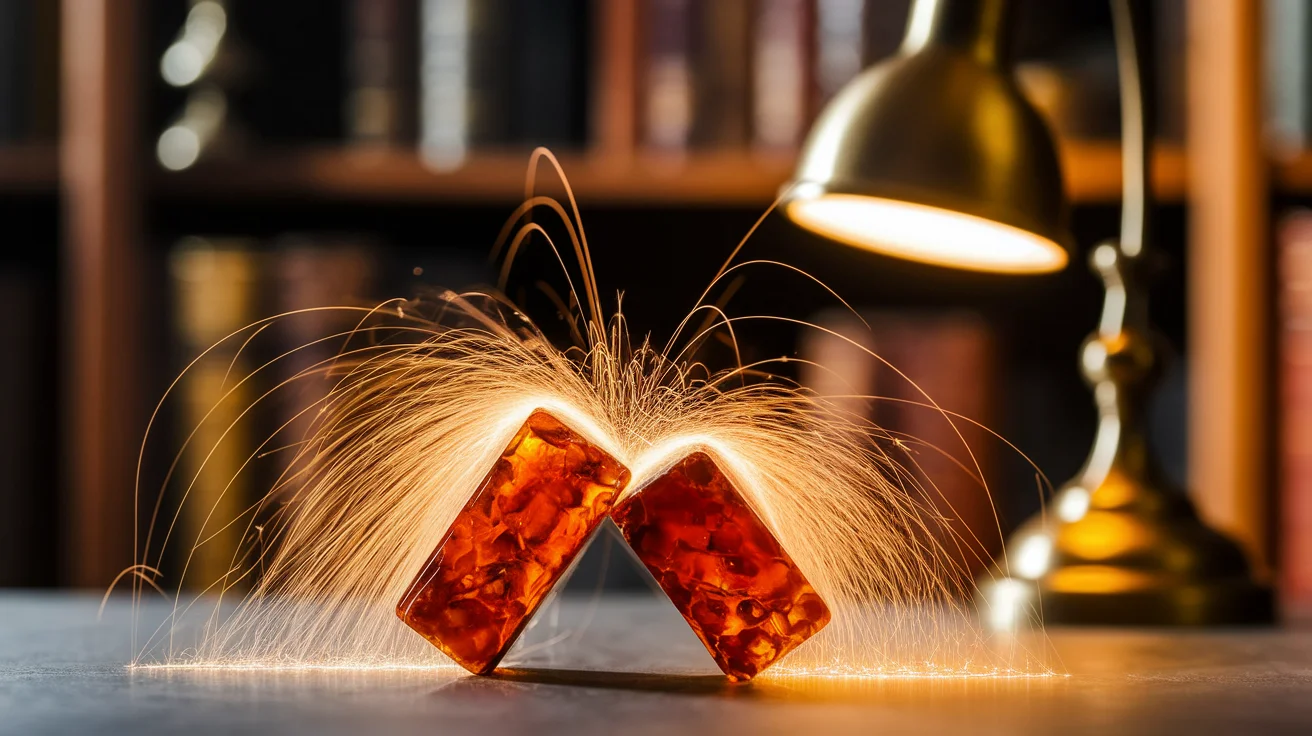
Despite centuries of study, static electricity remains poorly understood, but ongoing research is shedding light on its causes and applications.
Static electricity, a common phenomenon that causes objects to attract or repel each other after contact, has puzzled scientists for over two millennia. According to a Nature News article, charge transfers between materials when they touch and separate, but the exact processes remain unclear.
Researchers have focused on whether electrons or ions are responsible for this charge transfer. The materials involved play a key role in charge accumulation, as highlighted in a Nature News and Views article from last year, which described the understanding of these processes as 'almost nil'.
Historical and Practical Applications
The triboelectric series, a scale ranking materials by their charging tendencies, was created in 1757 by Johan Carl Wilcke. However, experiments show inconsistent results due to factors like temperature, moisture, and surface conditions.
Static electricity has practical implications, including preventing harm from lightning through conductors and avoiding explosions in industrial settings where materials contact frequently. Greater knowledge of the mechanisms could improve these safety measures.
Recent studies have advanced the field. Last year, physicists Juan Carlos Sobarzo and Scott Waitukaitis at the Institute of Science and Technology Austria discovered a memory effect in materials, where previously used samples charge negatively.
In a study published this week, Waitukaitis and colleagues found that surface effects, such as carbon contamination on oxides, influence charging polarity. This builds on earlier work showing how ambient conditions affect static electric discharge.
Despite progress, static electricity remains a fundamental scientific mystery, as noted in a 1917 paper by P. E. Shaw, emphasizing the need for replicable experiments to address variables like material history and structure.