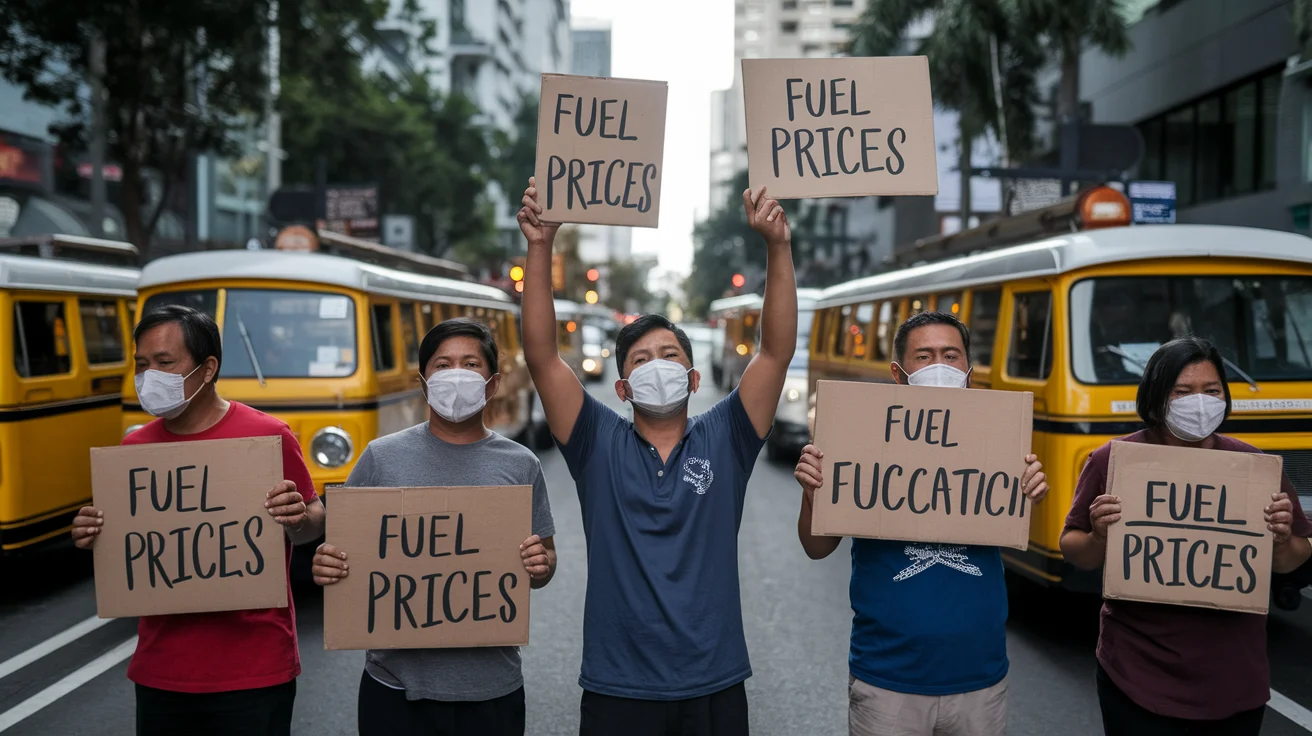
Transport workers in the Philippines strike over doubled fuel prices, highlighting economic hardships and government responses.
Hundreds of transport workers in Manila, Philippines, launched a two-day strike on Thursday to protest soaring fuel costs, which have more than doubled since the Iran war began on February 28. Workers, including jeepney drivers, cited desperation due to unaffordable diesel and petrol prices, with one 62-year-old driver telling the BBC he had no food for his five children and received no government cash aid.
The strike coincides with the arrival of a ship carrying over 700,000 barrels of Russian crude oil in the Philippines earlier this week, as stated by President Ferdinand Marcos' press secretary, Claire Castro. Marcos has promised to seek new oil sources, as the country relies on supplies through the Strait of Hormuz for 98% of its requirements, and has signed a law allowing temporary suspension of excise taxes on petroleum if oil prices exceed $80 per barrel for a month.
Workers' Demands and Protests
Transport coalitions leading the strike demand scrapping fuel taxes, rolling back oil prices, abandoning deregulation, and introducing state controls, along with fare increases and higher wages. Protesters gathered in Manila, holding signs and calling for government assistance, with some drivers reporting they did not receive the promised 5,000 pesos ($83) aid from the Department of Social Welfare and Development.
Individual stories highlight the hardship: 28-year-old driver Anjo Lilac brought his daughter to the protest, explaining he needed the aid for food and rent, while 58-year-old Ronnie Rillosa, a 30-year veteran driver, said families are 'being choked' by costs and called for price cuts on fuel, food, electricity, and water instead of aid.
The strike is disrupting commuters in one of Asia's most congested cities, with people like 52-year-old Arnold Irinco waiting in lines for free government rides. He expressed understanding for the protesters, noting their need to support families amid the crisis.
On Tuesday, Marcos declared a national state of energy emergency, empowering the government to ensure fuel distribution and purchase supplies directly. This makes the Philippines the first country to do so amid the Iran conflict, though labor coalition Kilusang Mayo Uno criticized it as an admission of government failure, particularly over potential restrictions on strikes.
Business leader Manuel V. Pangilinan supported the emergency powers, stating his companies face strain from rising energy costs and that the government needs options to stabilize the economy. The government has also implemented subsidies, reduced ferry services, and a four-day work week for civil servants to conserve fuel.