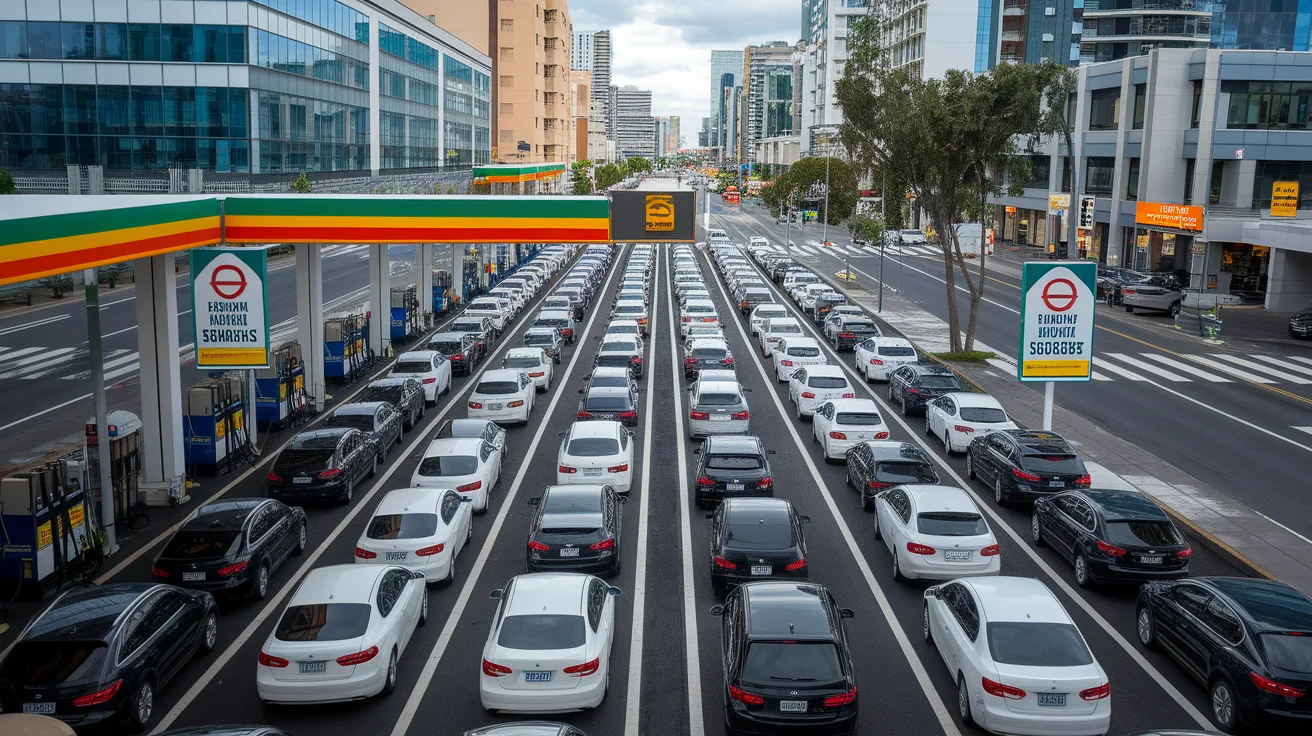
Panic buying causes fuel shortages across Australia as prices surge due to global tensions.
Australian Prime Minister Anthony Albanese addressed reporters on Friday, stating that the country's fuel supply is "secure" amid widespread panic buying triggered by the Iran war. He emphasized that the government is preparing to shield Australians from the conflict's impacts, with fuel distribution issues arising from heightened demand rather than shortages in actual stock.
Fuel Shortages and Price Surges
Hundreds of petrol stations across Australia have reported running out of at least one type of fuel this week. In New South Wales, one in seven retailers are out of stock, while in Cairns, Queensland, a local garage has exhausted its unleaded petrol supplies and seen diesel prices rise by 85% since the war began.
The average retail price of petrol has climbed to 238 Australian cents per litre, up from 171 cents four weeks earlier, according to the Australian Institute of Petroleum. Diesel prices in Sydney have reached a record high of 314.5 cents per litre, as reported by the National Roads and Motorists' Association.
Energy Minister Chris Bowen confirmed that Australia's fuel supply levels for petrol, diesel, and oil are the same or higher than normal for the coming weeks. He noted that shortages stem from changes in buying habits, such as motorists filling jerry cans and storing fuel, rather than any reduction in imports.
Government Response and Additional Pressures
The government has ruled out rationing and is releasing oil from the national stockpile while lowering fuel standards to ease shortages. Albanese plans to hold an emergency national cabinet meeting on Monday to address the crisis.
A cyclone in western Australia has further complicated the situation by causing outages at two major LNG plants, Gorgon and Wheatstone, which supply about 5% of the global market. This adds pressure to fuel availability, though it is not directly tied to the Iran-related issues.
Businesses, including transport companies, report that rising costs are affecting operations, with drivers instructed to refuel whenever possible. Independent petrol stations are struggling more than others due to reliance on spot purchases rather than long-term contracts.