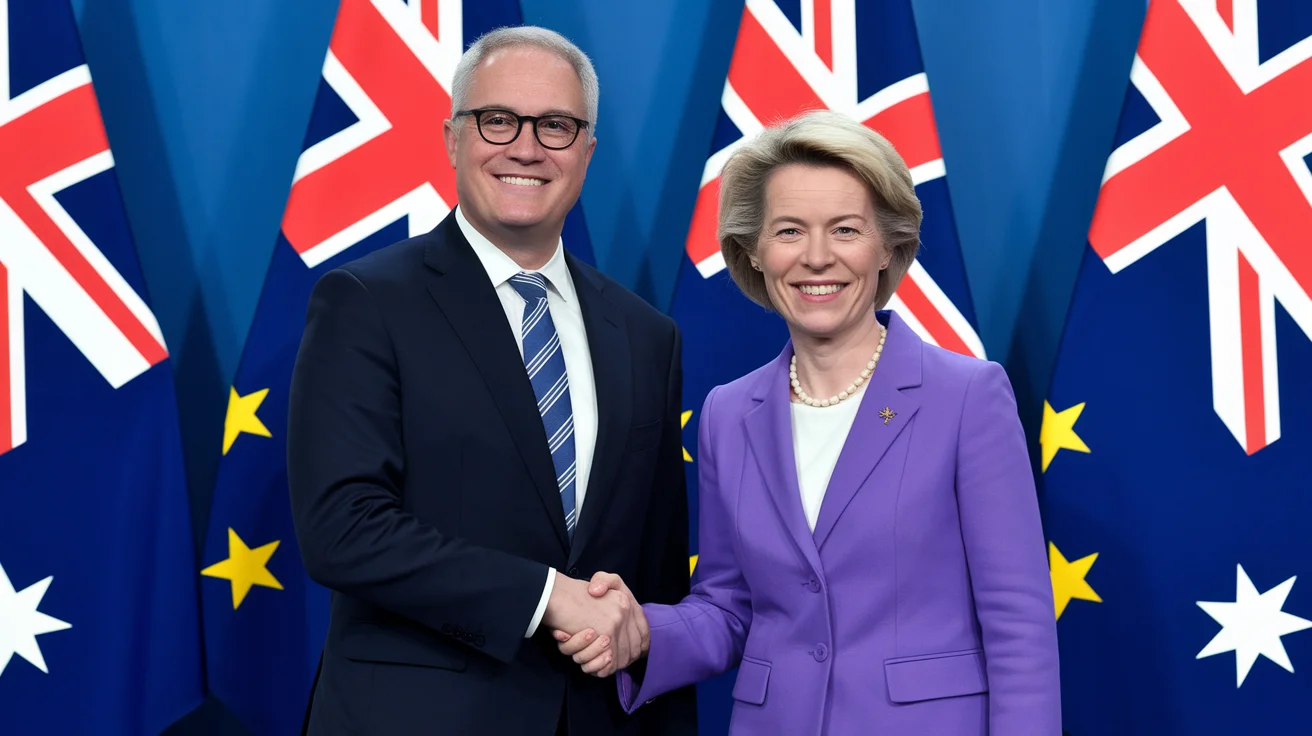
EU and Australia agree on a new trade deal that removes over 99% of tariffs on EU goods, benefiting sectors like wine, beef, and electric vehicles, while also establishing a defens
The European Union and Australia announced a new free trade agreement on March 24, 2026, ending eight years of negotiations and aiming to enhance bilateral trade amid global economic challenges.
Key Provisions of the Deal
The agreement eliminates over 99% of tariffs on EU goods exported to Australia, saving companies approximately €1 billion annually in duties. This includes immediate tariff reductions on EU wine, sparkling wine, fruit, vegetables, and chocolates, with cheeses following over three years.
Australian imports will benefit from lowered tariffs on critical minerals and electric vehicles, raising the luxury car tax threshold to exempt three-quarters of EVs. The deal also opens EU markets to Australian beef and sheep meat through specific quotas.
For beef, the EU will allow two tariff rate quotas totaling 30,600 tons, with 55% entering duty-free and 45% at a reduced 7.5% duty, phased in over five years. Additionally, a 25,000-ton quota for Australian grass-fed sheep and goat meat will be introduced over seven years to protect EU farmers.
The agreement addresses long-standing disputes over protected product names, permitting Australian producers to use terms like feta and gruyere for products established for at least five years. Australian winemakers can label Italian-style sparkling wine as 'prosecco' for exports but must phase this out after 10 years.
Beyond trade, EU Commission President Ursula von der Leyen and Australian Prime Minister Anthony Albanese agreed on a security and defense partnership during their meeting in Canberra. Von der Leyen described the collaborations as a way for the EU and Australia to align more closely on global issues.
The European Union, as Australia's third-largest trading partner and second-largest source of foreign investment, expects EU exports to Australia to grow by 33% over the next decade, particularly in motor vehicles, chemicals, and other sectors. Australian Trade Minister Don Farrell stated the deal will add 10 billion Australian dollars to trade in the first year.
The agreement requires approval from the European Council and Australia's parliament before formal signing, marking a significant step in diversifying trade partnerships for both regions.