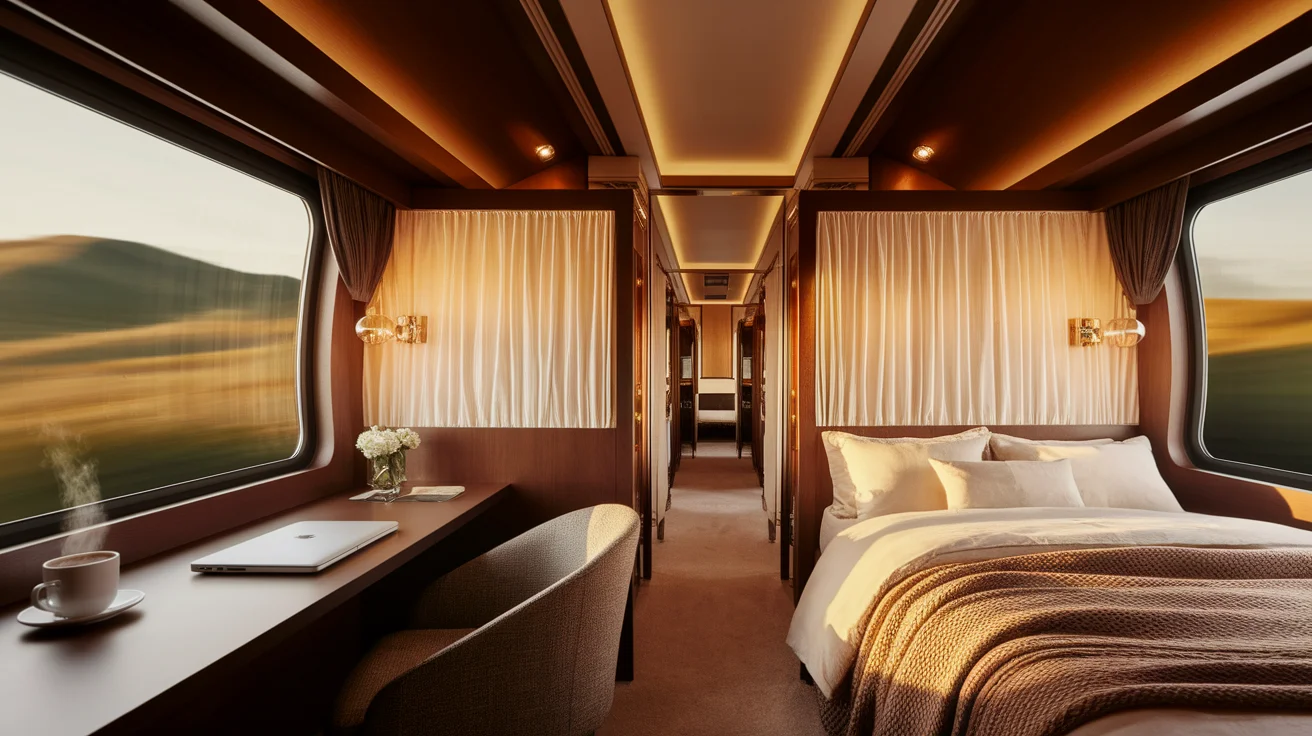
Innovative smart cabins could increase capacity and comfort on European night trains, helping to compete with air travel and reduce emissions.
Europe has seen fluctuating interest in night trains, with recent demonstrations in cities like Berlin calling for more connections to reduce reliance on flights. Activists argue that night trains offer a comfortable, eco-friendly alternative, as highlighted by protesters at Berlin's main station.
Night trains were once popular but declined in the mid-20th century due to the rise of highways and affordable air travel. By the 1980s, fewer routes operated as passengers opted for quicker options.
Recent Developments in Night Train Services
Austria's state railways, ÖBB, resumed routes like Paris to Berlin in 2023, but discontinued them after two years due to cuts in French subsidies. Private companies such as European Sleeper have since taken over some routes, operating on select days to maintain service.
The Swedish state railroad ended its Berlin-Stockholm line in 2024, citing unprofitability from high costs like night surcharges and limited passenger capacity. For instance, an ÖBB Nightjet carries only 254 passengers compared to a high-speed train's 918.
Berlin entrepreneur Anton Dubrau founded Luna Rail in 2024 to address these issues with smart cabins. These cabins transform from seats into beds at the touch of a button, offering privacy and workspace for daytime use, potentially fitting 60 units into one compartment on two floors.
Dubrau's design aims for affordability, with tickets priced around €100 for second-class and €150 for first-class, similar to air travel costs. A 2023 Swedish study emphasized that price is a key factor in travel choices, and the EU plans to double rail passengers by 2030.
Trains emit far fewer greenhouse gases than planes, according to the International Energy Agency, making them a greener option. Luna Rail estimates its cabins could be in use by 2030, helping meet EU goals for sustainable transport despite challenges like station regulations and construction delays.