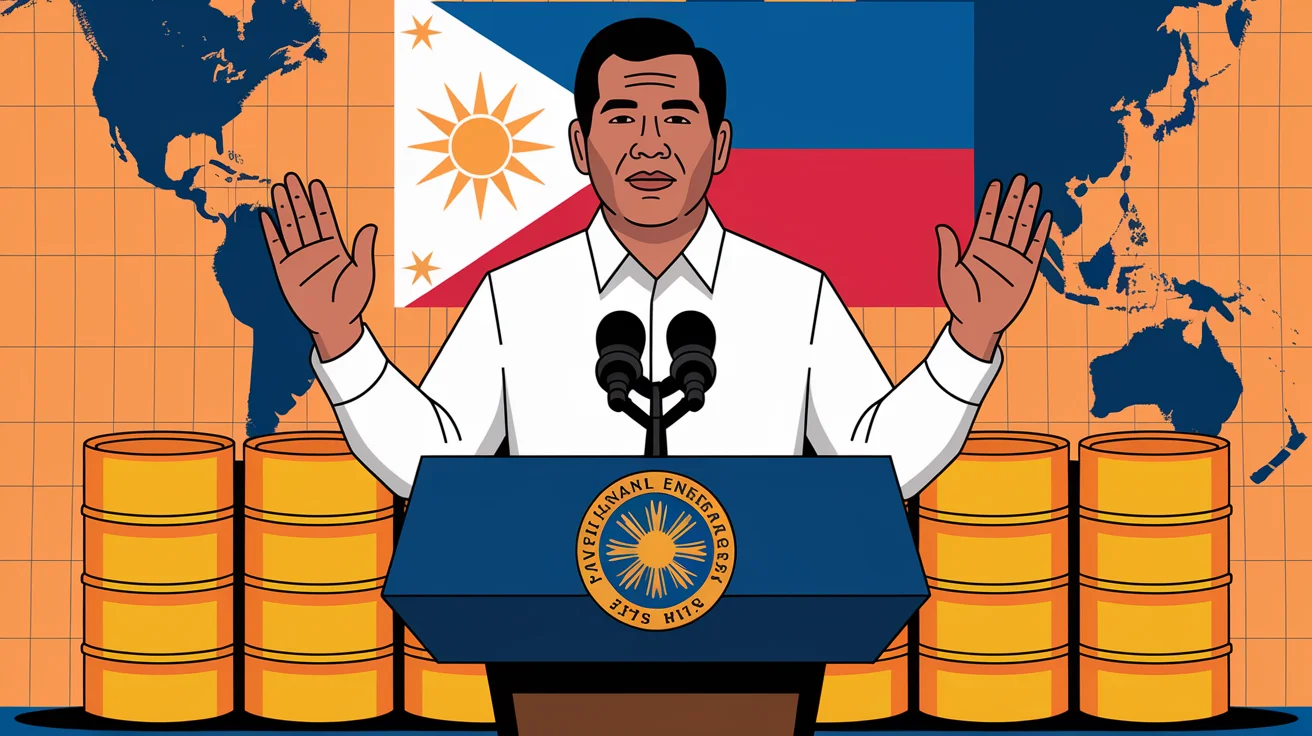
Philippine leader responds to global energy crisis with emergency declaration, but faces backlash from unions.
Philippine President Ferdinand Marcos Jr declared a national energy emergency on Tuesday in response to the US-Israel war on Iran, citing risks to the country's energy supply and global disruptions.
The declaration, effective for one year, allows the government to implement measures under existing laws, including forming a committee to manage the supply and distribution of fuel, food, medicine, and other essentials.
Government Actions
As part of the response, authorities will procure fuel and petroleum products, potentially paying in advance, and address issues like hoarding and price manipulation. Energy Secretary Sharon Garin stated that the Philippines has about 45 days of fuel supply based on current levels and is seeking to acquire 1 million barrels from various sources.
The government is working with the United States to explore exemptions for purchasing oil from sanctioned countries, though details remain unclear. Additionally, subsidies of 5,000 pesos ($83) are being provided to motorcycle taxi drivers and public transport workers, with free bus rides offered to students and workers in some cities.
Transport unions, including the federation Piston, criticized the declaration as a "superficial band-aid" that fails to tackle root causes like high fuel taxes. They plan a two-day strike starting Thursday to protest rising prices and demand the suspension of excise and value-added taxes on petroleum.
Philippine senators and groups like the Bayan coalition echoed these concerns, arguing that the measures do not include price controls or address the core issue of oil price surges. The emergency aims to mitigate economic impacts, but unions warn it leaves multinational oil companies unchecked in setting prices.